

Shredded nori, industrially known as kizami nori, is a specialized culinary garnish made by mechanically slicing roasted Porphyra seaweed sheets into micro-thin, uniform strips. These strips typically measure between 1mm and 3mm in width. The ingredient acts as a highly concentrated, plant-based source of glutamic acid. Food manufacturers and chefs utilize it to deliver immediate umami flavor and structural texture to broths, rice dishes, and commercial snack blends.
Understanding this ingredient requires looking beyond the kitchen. Transforming raw marine algae into delicate, uniform shreds relies on advanced food processing technology. What begins as a marine harvest must undergo rigorous thermal extrusion and precision cutting.
For commercial food buyers and culinary professionals, the engineering behind this seaweed directly impacts its performance. This guide explores the manufacturing mechanics, practical applications, and sourcing logic for everyday food production.
How Commercial Nori Is Engineered
Transforming raw seaweed into precision-cut strips requires strict environmental and mechanical controls. Commercial seaweed production shares many similarities with industrial paper-making. However, food safety requirements demand far tighter operational tolerances.
The industrial workflow consists of several critical manufacturing phases:
- Marine Milling: Raw harvested algae is rigorously washed to remove ocean debris before being minced into a fine, liquid slurry.
- Thermal Extrusion: Automated machinery spreads the slurry across porous mesh screens to form uniform, continuous sheets.
- Infrared Roasting: The dried sheets pass through precisely calibrated infrared ovens. This high-temperature roasting ruptures the cellular walls, unlocking the savory amino acids.
- Rotary Shredding: High-speed, multi-blade rotary cutters slice the roasted sheets into exact widths.
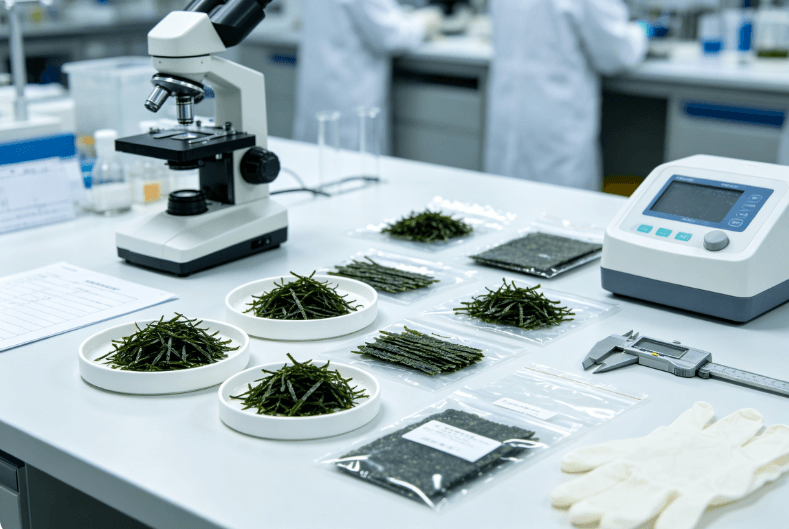
Precision cutting is heavily dependent on moisture control. In large-volume production, the ambient humidity of the shredding facility must remain tightly regulated. If the seaweed exceeds a 4% moisture content, the sheets become rubbery and flexible.
Rubbery sheets will jam automated cutting machinery and cause frayed edges. To prevent this, top-tier manufacturing lines utilize ultra-sharp rotary blades with clearances measured in micrometers. Understanding how commercial nori is made highlights why automated environmental controls are mandatory for high-quality production.
Culinary Applications: Using Shredded Nori in Everyday Food
The physical geometry of shredded nori makes it an incredibly versatile functional ingredient. Unlike whole seaweed sheets, thin strips integrate seamlessly into complex dish formulations. They provide a high surface-area-to-volume ratio, which accelerates flavor release.
Noodle and Broth Integration
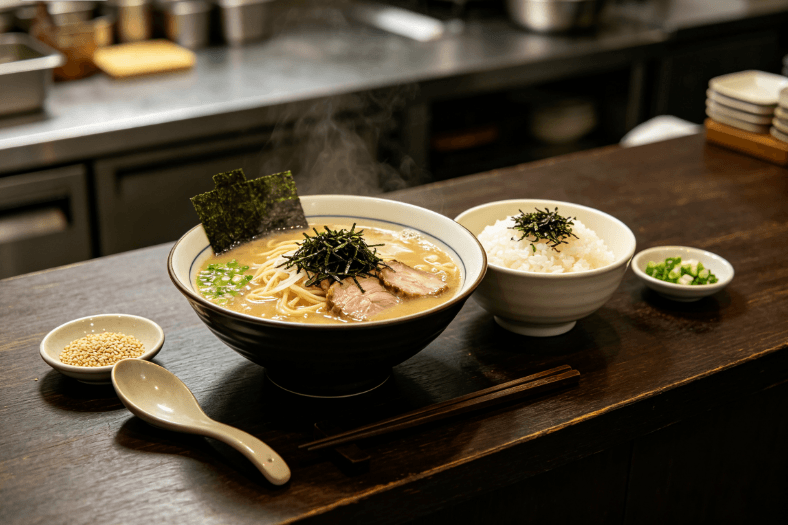
Warm liquids activate the volatile aromatic compounds trapped within the roasted seaweed cells. Dropping a handful of shreds over ramen or udon adds instant savory depth. In commercial Japanese-Italian fusion, wafu pasta relies on these strips to replace heavy dairy with marine umami.
Rice Bowls and Poke Concepts
Commercial food service operators utilize these strips for donburi and poke bowls to add textural contrast. The dry shreds provide a crisp bite against soft, warm rice. When blended with toasted sesame seeds, the shreds create a highly scalable, shelf-stable seasoning mix.
Industrial Snack Formulations
Beyond direct food service, OEM snack manufacturers frequently incorporate these strips into savory trail mixes and extruded snacks. The dry crunch contrasts beautifully with baked goods.
Here is a brief performance comparison of commercial seaweed formats:
| Seaweed Format | Processing Method | Primary Culinary Function |
| Whole Sushi Nori | Pressed and roasted in flat sheets | Structural wrapping for maki and onigiri |
| Shredded Nori | Roasted sheets mechanically sliced | Textural garnishing for noodles and bowls |
| Aonori Powder | Dried and pulverized into micro-powder | Surface dusting for savory pancakes and snacks |
Moisture Dynamics and Barrier Packaging
Maintaining the crispness of shredded seaweed presents a significant mechanical storage challenge. The ingredient is highly hygroscopic, meaning it rapidly absorbs atmospheric moisture. Once exposed to ambient air, the strips degrade quickly.
When seaweed absorbs moisture, the internal starches undergo retrogradation. The crispy texture irreversibly transitions into a chewy, unpalatable state. This physical degradation is usually accompanied by a loss of vibrant green pigmentation.
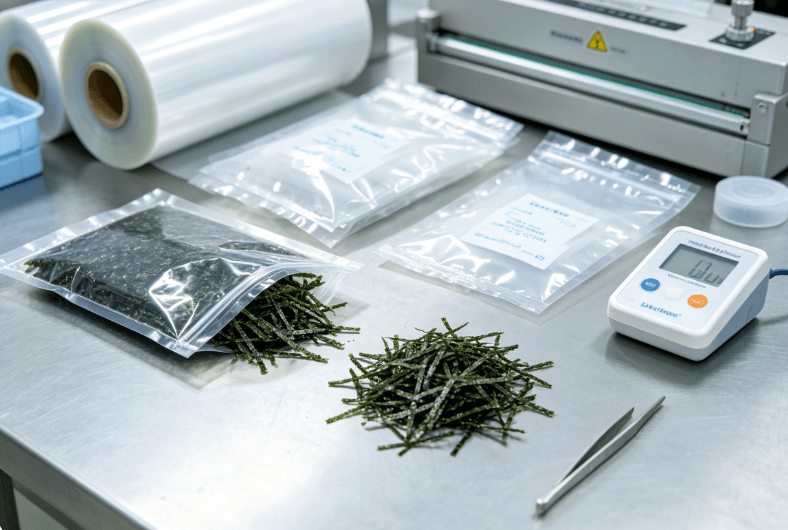
Food packaging engineers utilize advanced barrier materials to prevent this spoilage. Multi-layer extrusion films containing EVOH (Ethylene Vinyl Alcohol) block both ultraviolet light and humidity. Commercial packaging standardly includes food-grade silica gel desiccants to manage residual internal moisture.
Premium production facilities often employ nitrogen flushing during the final sealing process. Nitrogen gas displaces ambient oxygen inside the bag. This process halts oxidation, extending the shelf life and protecting the fragile flavor compounds during global transit.
Sourcing OEM Seaweed: Why Food Manufacturers Choose Haipu
When procuring functional ingredients for large-scale food service, manufacturer capabilities dictate final product quality. Reliable production requires facilities operating under strict ISO 22000 and HACCP frameworks. Buyers must evaluate a supplier’s cutting tolerances and environmental control systems.
Uniform strip width ensures consistent flavor release and predictable aesthetic appeal in plated dishes. Inconsistent shredding often indicates worn machinery or poor moisture management. Optimal commercial products maintain a strict moisture level between 2% and 4%.
Integrated supply chains offer the most secure traceability from marine harvest to final packaging. Facilities specializing in seaweed engineering provide consistent shredded nori options tailored for global distribution. Haipu Sushi Nori stands out as a premier OEM manufacturing partner in this space.
Haipu provides extensive customization capabilities for B2B buyers and commercial kitchens. Their advanced rotary cutting systems can adjust shred dimensions to meet specific culinary applications. By maintaining strict environmental controls, Haipu ensures every batch delivers maximum crispness and authentic umami flavor.
Frequently Asked Questions
What makes shredded nori different from regular sushi wrappers?
It utilizes the exact same roasted Porphyra algae sheets used for sushi rolls. However, it undergoes an additional mechanical slicing process to create 1mm to 3mm strips designed for garnishing rather than wrapping.
Does shredded seaweed dissolve completely in hot soup?
No. It softens significantly and releases glutamic acid into the broth, but it retains its structural integrity. The fibers break down slowly, leaving a delicate, slippery texture.
What is the standard moisture content for commercial shredded seaweed?
High-quality commercial products maintain a moisture content between 2% and 4%. If the moisture level exceeds 4%, the strips lose their crispness and become rubbery during transport.
Can OEM suppliers customize the width of the shreds?
Yes. Advanced manufacturing facilities can adjust their rotary cutting machinery. Buyers can request specific strip widths based on their proprietary food formulations or aesthetic requirements.
How is the product packaged to prevent moisture damage during shipping?
Manufacturers utilize multi-layer barrier films, nitrogen flushing, and industrial-grade silica desiccants. These engineering controls prevent atmospheric humidity and oxygen from degrading the product before opening.
Reference Sources
- International Organization for Standardization (ISO). “ISO 22000:2018 – Food Safety Management Systems Requirements.”
- Food and Agriculture Organization (FAO). “Seaweed Processing, Properties, and Cultivation Guidelines.”
- Journal of Applied Phycology. “Nutritional Profiles and Moisture Dynamics of Cultivated Porphyra Species.”
- Institute of Food Technologists (IFT). “Moisture Migration and Barrier Packaging in Dehydrated Marine Products.”