

Seasoned nori is a highly processed marine agricultural product widely used in the global food and beverage industry. Known traditionally as Ajitsuke Nori, it represents a specific category of edible seaweed. The product undergoes specialized roasting and flavoring processes before commercial distribution.
For food service operators and snack manufacturers, understanding this ingredient is critical. Selecting the right seaweed variant impacts menu quality, shelf-life stability, and customer satisfaction. The production of this ingredient requires strict moisture control and precise flavor calibration.
This guide explores the technical specifications, flavor profiles, and commercial applications of seasoned nori. We will also detail essential quality metrics for procurement teams evaluating new supply chain partners.
What Is Seasoned Nori and How Is It Manufactured?
Seasoned nori is a dried, roasted seaweed sheet coated with a specific liquid flavoring mixture. The base material is typically Pyropia (formerly Porphyra), red algae harvested from specialized aquaculture farms. The seasoning process transforms standard roasted seaweed into a standalone snack or savory garnish.
Industrial manufacturing of seasoned seaweed involves multiple controlled stages. Harvesters first wash, chop, and press the raw seaweed into uniform sheets. These sheets pass through high-temperature commercial ovens for the initial roasting phase.
Following the primary roast, the flavoring stage begins. Manufacturers pass the sheets through automated rollers or sprayers. These machines apply a precise coating of seasoning liquid. The standard commercial seasoning base includes soy sauce, mirin, sugar, salt, and kelp extract.
After flavoring, the sheets enter a secondary dehydration chamber. This step is critical for commercial viability. The secondary drying process reduces the moisture content back down below 4%. Strict moisture control ensures the product retains its signature crisp texture during transit and storage. Finally, the sheets are cut into specific dimensions and packaged rapidly to prevent oxidation.
Seasoned Nori vs. Roasted Nori (Yaki Nori)
Procurement teams must distinguish between seasoned seaweed and standard roasted seaweed. While they share the same base raw material, their processing and culinary applications differ significantly.
Roasted nori, or Yaki Nori, contains no added ingredients. It offers a pure, naturally oceanic flavor profile. It is the primary structural component used for commercial sushi rolls. Seasoned seaweed, conversely, features added moisture and sugars during processing. This makes it slightly more fragile but highly flavorful.
The table below outlines the primary technical and commercial differences.
| Feature | Seasoned Nori (Ajitsuke Nori) | Roasted Nori (Yaki Nori) |
| Flavor Profile | Sweet, savory, high umami, soy-based | Pure oceanic, slightly toasted, subtle |
| Processing | Roasted, coated in liquid seasoning, re-dried | Washed, pressed, and roasted once |
| Texture | Highly crisp, slightly sticky surface, brittle | Dry, flexible enough for tight rolling |
| Moisture Sensitivity | Extremely high (requires robust desiccants) | High (requires standard desiccants) |
| Primary Commercial Use | Standalone retail snacks, rice garnishes | Sushi manufacturing, large wrap applications |
Commercial Uses and Food Ideas for Seasoned Nori
Commercial kitchens utilize seasoned seaweed to elevate standard menu items efficiently. Its high umami content acts as a natural flavor enhancer. This allows chefs to add complexity to dishes without increasing preparation time.
For food and beverage brands, it presents excellent OEM product opportunities. The material can be packaged in single-serve formats for retail snack distribution. Below are primary commercial applications and menu ideation concepts.
Ready-to-Eat Rice Applications
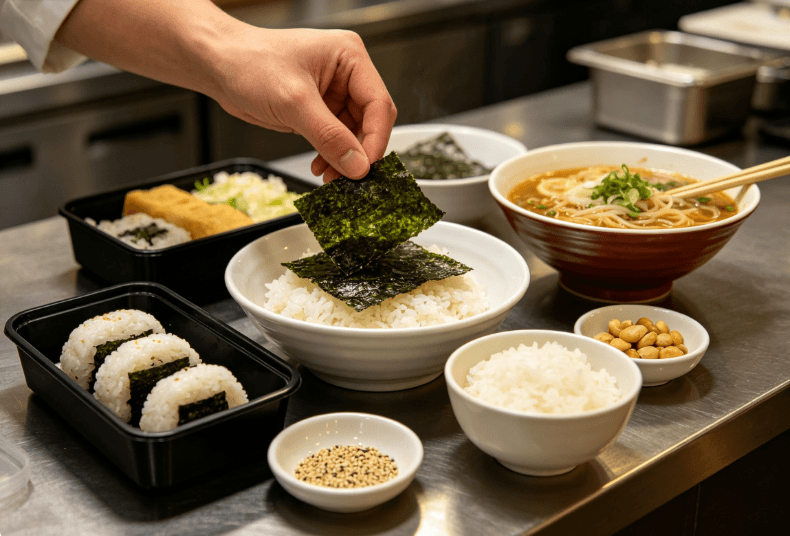
- Onigiri Wrapping: Convenience stores use seasoned seaweed to wrap premium rice balls. The seasoning complements plain or lightly salted rice perfectly.
- Rice Bowls (Donburi): Restaurants shred or place whole strips of the seasoned sheets over warm rice bowls. It adds instant visual appeal and savory depth.
- Bento Box Garnishes: Caterers include small, individually wrapped packs in commercial bento boxes. This allows the end consumer to maintain the product’s crispness until consumption.
Soups and Broth Enhancements
- Ramen Garnish: High-end ramen shops use thicker grades of seasoned seaweed. The sugars and soy in the seasoning melt slightly into the hot broth.
- Miso Soup Pairings: While raw wakame is standard inside miso soup, crisp seasoned sheets are often served alongside it.
Retail Snack Manufacturing
- Flavored Snack Packs: Brands source wholesale seasoned seaweed to create low-calorie retail snacks. Popular flavor extensions include teriyaki, spicy chili, and sesame oil.
- Trail Mix Integration: Innovative snack brands cut the seasoned sheets into small squares. These are mixed with roasted nuts and rice crackers for premium bar snacks.
Key Quality Metrics When Sourcing Seasoned Nori
Evaluating suppliers requires strict attention to material specifications. High-quality seasoned seaweed must meet specific physical and chemical standards. Procurement managers should request detailed product specification sheets before authorizing bulk purchases.
Color and Visual Integrity
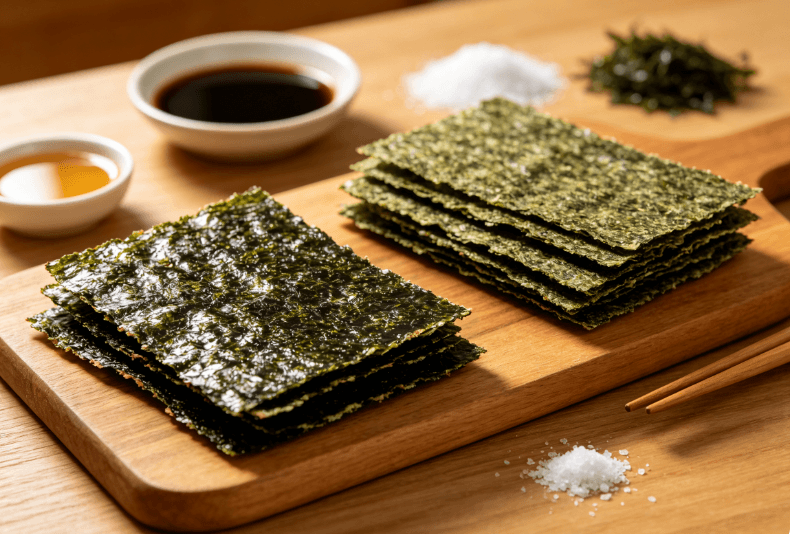
Premium grades exhibit a deep, dark green or nearly black hue. The surface should have a glossy sheen resulting from the seasoning glaze. Dull, brownish, or excessively pale sheets indicate low-grade raw materials or severe oxidation. There should be no irregular holes or uneven edges in premium cuts.
Texture and Moisture Content
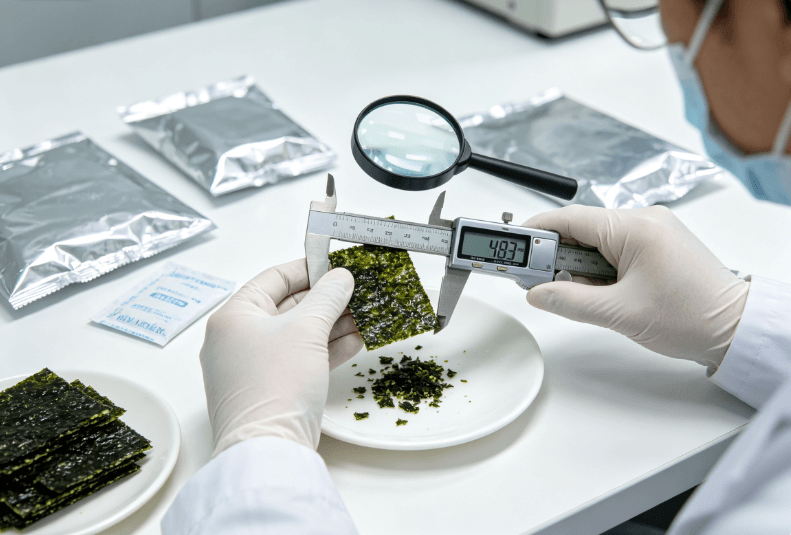
Crispness is the most critical quality metric. The seaweed must snap cleanly when folded. If the product bends without breaking, the moisture content is too high. Commercial grades require a moisture level below 4%. Any deviation compromises the shelf life and sensory experience.
Packaging and Preservation
Proper packaging engineering is mandatory for seasoned seaweed. The high sugar and salt content makes it highly hygroscopic. Bulk suppliers must use high-barrier metalized films or thick aluminum foil pouches. Nitrogen flushing is often employed to displace oxygen. Furthermore, industrial-grade silica gel desiccants must be included in every sealed unit.
Sourcing Seasoned Nori for Retail and Food Service
Transitioning from menu ideation to scalable production requires a reliable manufacturing partner. Consistent flavor calibration and strict quality control are non-negotiable. Variations in the seasoning process can lead to unacceptable inconsistencies in your final food products.
When selecting a supplier, look for specialized manufacturers with dedicated production lines. For instance, evaluating products like specialized seasoned nori for rice allows buyers to match the exact cut and flavor profile to their specific culinary needs. Specialized producers understand the required thickness and seasoning ratios needed for hot rice applications.
For custom retail snacks or bulk food service procurement, direct factory communication is essential. Discussing Minimum Order Quantities (MOQs), packaging customization, and lead times early prevents supply chain bottlenecks. Procurement teams should contact the production team directly to request sample batches and verify food safety certifications like HACCP or ISO 22000.
Frequently Asked Questions
What is the standard shelf life of commercial seasoned nori?
When stored in an unopened, nitrogen-flushed, high-barrier package with a desiccant, seasoned seaweed typically lasts 12 to 18 months. Once the package is opened, it rapidly absorbs ambient moisture and loses its crispness within 24 to 48 hours.
Can seasoned nori be customized with different flavors for OEM production?
Yes, B2B manufacturers frequently offer custom flavor profiling. While soy and mirin are standard, buyers can request formulations featuring wasabi, kimchi, sea salt, or olive oil. Custom runs usually require specific MOQs to justify the specialized flavoring setup.
Does seasoned nori contain common food allergens?
Standard seasoned seaweed often contains soy and wheat, as traditional soy sauce is a primary ingredient in the flavoring liquid. Formulations may also include traces of sesame or fish extract (bonito). Buyers requiring gluten-free or vegan options must request specialized seasoning formulations from their supplier.
How does moisture affect the processing of seasoned nori?
Applying liquid seasoning inherently raises the moisture level of the roasted sheet. Manufacturers must utilize precise secondary drying technology to remove this moisture without burning the sugars in the seasoning. Improper drying leads to microbial growth and rapid product degradation.
Reference Sources
- Food and Agriculture Organization (FAO) – Globefish Research Programme: Seaweed Market Analysis and Processing Standards.
- International Organization for Standardization (ISO) – ISO 22000:2018 Food safety management systems – Requirements for any organization in the food chain.
- U.S. Food and Drug Administration (FDA) – Hazard Analysis Critical Control Point (HACCP) Principles and Application Guidelines for Seafood Processing.
- National Institutes of Health (NIH) / PubMed – Physicochemical Properties and Sensory Evaluation of Commercial Seasoned Laver (Pyropia yezoensis).