

Nori sheets are edible, paper-thin wraps processed from red algae. The commercial species is primarily Pyropia yezoensis. Food manufacturers and culinary professionals rely heavily on these dried sheets.
What are nori sheets used for at a base level? They provide structural support, moisture barriers, and dense umami flavor to various foods. Producing them requires precise industrial workflows.
Raw algae undergoes intense washing and mechanical maceration. Processing equipment pumps the slurry onto specialized drying screens. The resulting raw sheets then enter high-temperature roasting tunnels.
Commercial roasting reduces the moisture content below five percent. This precise dehydration creates the crisp, fragile texture required for food service. Manufacturers then sort the sheets into distinct commercial grades.
What Are Nori Sheets Used For? 10 Popular Food Ideas
Understanding specific seaweed applications helps optimize commercial menu development. Different culinary concepts demand different mechanical and flavor properties from the nori.
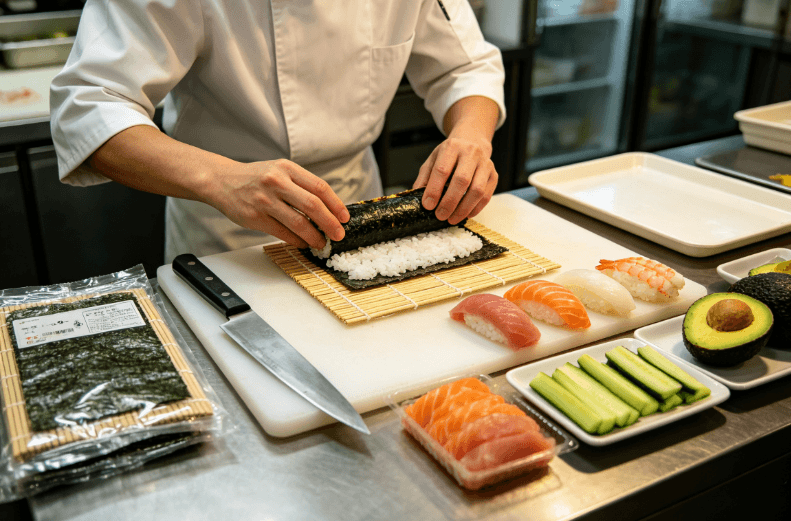
1. Commercial Maki Sushi Rolls
Maki rolls represent the highest volume application for roasted seaweed. The nori serves as a critical structural envelope. It contains the seasoned rice and internal ingredients tightly.
Commercial sushi robots demand specific material tolerances. The sheets must possess exceptional tensile strength. Weak seaweed will tear during automated processing and mechanical slicing.
Chefs typically source premium grades for sushi applications. High-quality sheets offer uniform thickness and minimal micro-tears. This ensures optimal visual appeal and reliable production speeds.
2. Onigiri (Rice Balls)
Onigiri utilizes nori as a functional handling barrier. The seaweed prevents sticky rice from adhering to consumer fingers. It also delivers a complementary roasted flavor profile.
Industrial production relies on specialized isolation packaging. Double-layered plastic films keep the seaweed completely separated from the rice. Consumers combine the elements moments before eating.
Maintaining absolute crispness dictates the product’s market success. High moisture absorption ruins the intended sensory experience. Premium sheets are essential for modern convenience store offerings.
3. Ramen and Broth Garnishes
Many commercial noodle shops use quarter-cut sheets as savory garnishes. The seaweed partially rehydrates upon contact with hot broth. This releases natural glutamates into the soup.
Structural perfection is less critical for hot liquid applications. The seaweed is expected to soften and disintegrate slightly. Minor cosmetic defects do not impact the final dish.
Kitchen managers often utilize economical grades for these soups. This optimizes food costs without sacrificing the required umami flavor. It represents a highly efficient use of secondary material.
4. Premium Temaki (Hand Rolls)
Temaki demands the absolute highest quality roasted seaweed available. Customers consume these cone-shaped rolls immediately after preparation. The nori must shatter cleanly upon the first bite.
Any chewiness or toughness completely ruins the textural experience. Premium grades offer the thinnest cellular structure and optimal brittleness. They contain no dead grass or discolored spots.
High-end sushi bars strictly control ambient humidity around their temaki stations. They keep the sheets sealed until the exact moment of plating. This preserves the delicate cellular integrity.
5. Furikake Seasoning Blends
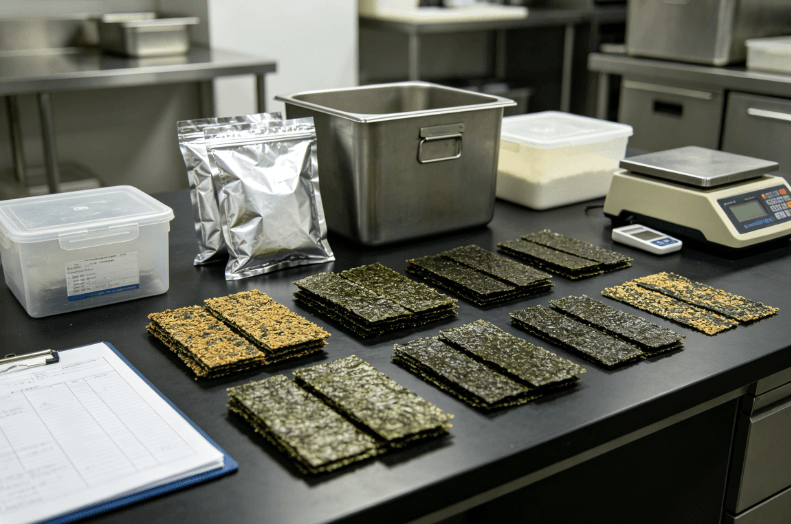
Food processors routinely convert nori offcuts into dry seasoning. Industrial milling machines reduce the seaweed into uniform flakes. Manufacturers then blend these flakes with salt and sesame seeds.
This application maximizes raw material yield. It effectively eliminates production waste from premium sheet manufacturing. Seasoning blends offer excellent profit margins for ingredient suppliers.
The dried flakes maintain a highly stable shelf life. They easily integrate into retail shaker bottles or bulk commercial packaging. This flexibility appeals strongly to wholesale distributors.
6. Roasted Seaweed Snacks
The savory snack sector consumes massive volumes of industrial nori. Manufacturing facilities brush the sheets with sesame or olive oil. They apply fine salt before a secondary roasting phase.
Processing lines then cut the sheets into small retail rectangles. High-speed packaging equipment seals them in foil pouches with silica desiccants. This rigorous moisture control extends shelf life significantly.
Snack formulations often use slightly thinner algae sheets. This ensures an ultra-light, melting texture upon consumption. The base material must absorb oils without losing structural integrity.
7. Vegan Seafood Alternatives
Plant-based food developers use nori for functional flavor extraction. The seaweed imparts a distinct, authentic oceanic taste to vegan formulations. It bridges the flavor gap in meatless recipes.
Chefs often wrap marinated tofu in moistened nori. After battering and flash-frying, the seaweed accurately mimics fish skin. This culinary technique is expanding rapidly in modern food service.
The nori provides both visual authenticity and essential savory notes. It allows product developers to avoid artificial seafood flavorings. Clean-label requirements make this an attractive industrial solution.
8. Gimbap (Korean Rice Rolls)
Gimbap resembles traditional sushi but utilizes distinct preparation methods. Kitchen operators lightly brush the nori with sesame oil before assembly. The fillings usually include dense meats and pickled vegetables.
The oil coating alters the seaweed’s mechanical texture slightly. The nori becomes more pliable and less brittle. This flexibility helps enclose the heavily stuffed rolls.
Operators require a highly resilient sheet for this application. Thin or brittle seaweed will rupture under the pressure of dense ingredients. Silver or Gold grades generally provide the necessary durability.
9. Kizami Nori (Shredded Toppings)
Fast-casual concepts frequently use finely shredded nori as premium garnishes. These delicate ribbons add immediate visual contrast to poke bowls. They also provide a subtle textural crunch.
Precision shredding requires specialized industrial cutting equipment. Dull blades will crush the dried cellular structure instead of slicing it. Clean cuts prevent the ribbons from clumping together.
Kitchens purchase these shreds pre-processed in bulk vacuum bags. This eliminates intensive labor costs during service hours. It guarantees a uniform presentation across franchise locations.
10. Fusion Nori Shells
Modern fusion kitchens utilize battered and fried nori sheets. Flash-frying transforms the flexible algae into a rigid, crispy taco shell. These shells hold raw fish, rice, and heavy sauces.
This intensive application demands thick, durable seaweed grades. Flimsy sheets will collapse entirely during the deep-frying process. The cellular matrix must withstand aggressive thermal shock.
Consistent sheet thickness prevents uneven cooking. Operators rely on high-grade nori to maintain portion control and presentation. This innovative technique commands premium menu pricing.
Evaluating Seaweed Grades for Food Service
Commercial nori is strictly graded based on visual and mechanical properties. Selecting the correct grade impacts both culinary performance and procurement budgets.
| Grade Level | Visual Appearance | Structural Integrity | Optimal Culinary Use |
| Gold | Deep dark green/black | Very high, uniform | Premium sushi, temaki |
| Silver | Dark green | High, minor variations | Standard maki, gimbap |
| Green | Standard green | Moderate durability | Snacks, garnishes, salads |
| Blue | Light green/brownish | Low, irregular thickness | Soups, furikake flakes |
Gold grade features zero dead spots and maximum crispness. Silver provides an excellent cost-to-performance ratio for standard operations. Lower grades contain cosmetic imperfections suitable for processing.
Sourcing Certified Ingredients for Commercial Production
Procuring consistent seaweed requires rigorous supplier evaluation. Moisture control and roasting precision dictate the final ingredient quality. Commercial buyers must partner with experienced manufacturing facilities.
Haipu Sushi Nori specializes in B2B roasted seaweed manufacturing. They provide comprehensive grading options for diverse culinary requirements. Their facilities comply with strict international food safety frameworks.
They offer customized OEM packaging solutions for food service brands. Haipu Sushi Nori supplies everything from premium sushi wraps to bulk industrial flakes. Their production capabilities support both restaurant chains and retail snack brands.
Proper sourcing directly impacts kitchen efficiency and automated production yields. Reliable suppliers ensure exact thickness tolerances and pristine moisture barriers. Consistent material input guarantees a superior final food product.
FAQ
Are commercial nori sheets meant to be eaten raw or cooked?
Most commercial nori sheets are fully pre-roasted at the factory. The raw algae is washed, pressed, and thermally dehydrated. They are completely safe to consume directly from the packaging without further cooking.
How do commercial kitchens prevent nori from getting soggy?
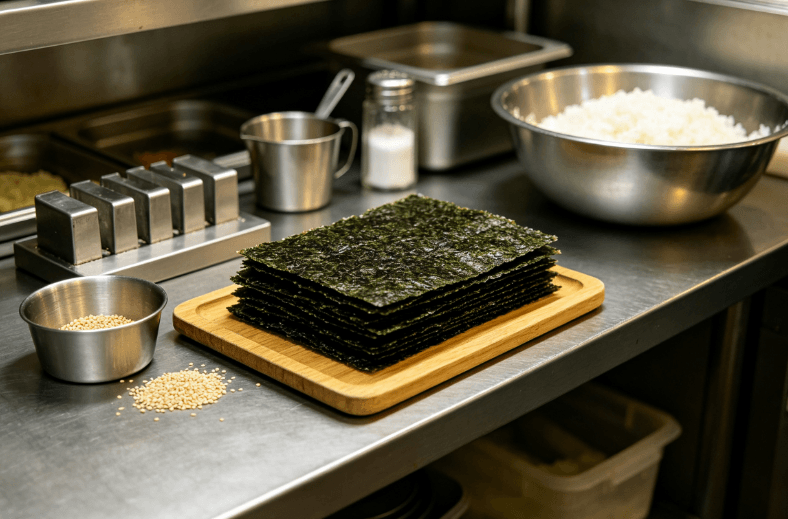
Ambient humidity is the primary threat to roasted seaweed. Kitchens store bulk nori in airtight stainless containers alongside industrial food-grade desiccants. Operators only expose minimal quantities to the kitchen environment during active service.
What makes sushi-grade nori different from snack nori?
Sushi-grade nori is specifically selected for high tensile strength and thickness. It must endure mechanical rolling and slicing without rupturing. Snack nori is intentionally thinner to provide an airy crunch when coated in oils.
Does roasted seaweed have a commercial expiration date?
Unopened vacuum-sealed bags typically maintain optimal quality for 12 to 18 months. Once the moisture barrier is breached, the quality degrades rapidly. Proper inventory rotation and humidity-controlled storage are essential for food service operators.
Can lower-grade nori be used for premium sushi rolls?
Using lower-grade nori for premium rolls increases the risk of production failure. The sheets often feature microscopic holes or uneven thickness. This leads to tearing during automated slicing and negatively impacts visual presentation.
Reference Sources
- Food and Agriculture Organization of the United Nations (FAO) – Global Seaweed Cultivation and Processing Data.
- U.S. Food and Drug Administration (FDA) – Hazard Analysis and Risk-Based Preventive Controls for Human Food.
- International Organization for Standardization (ISO) – ISO 22000:2018 Food Safety Management Systems.
- BRC Global Standards – Global Standard for Food Safety Issue 9 (Dried Food Processing Parameters).