

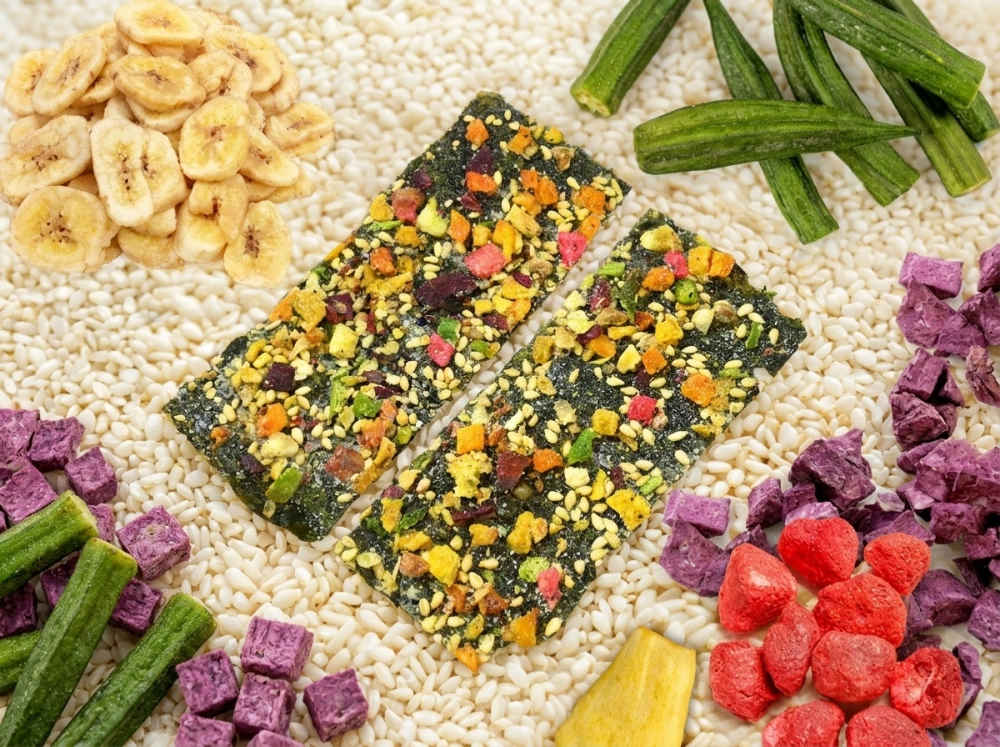
Fruit and vegetable nori is an industrially baked seaweed snack made by combining premium nori with natural fruit or vegetable juice, puree, or powder. It is not a homemade fresh vegetable nori wrap, which uses raw produce rolled inside sheets for immediate consumption.
In commercial snack manufacturing, the product is developed as a shelf-stable crisp or roll. Typical ingredients include roasted nori, pumpkin, purple sweet potato, apple, carrot, or other carefully selected produce ingredients.
What Is Fruit and Vegetable Nori, and Why Is It Growing?
Fruit and vegetable nori combines the savory character of seaweed with mild sweetness, color, and aroma from produce. This creates a more approachable snack for children and consumers who prefer lighter, naturally flavored products.
For importers, the product can occupy several retail positions:
•Healthy kids seaweed snacks with simple flavor profiles.
•Better-for-you office snacks with controlled portions.
•Premium fruit and vegetable nori crisps for specialty retailers.
•Colorful toppings or garnishes for foodservice and bakery products.
Ingredients in Fruit and Vegetable Nori
The base is normally high-quality cultivated nori, often identified as Porphyra yezoensis. Nori contributes a crisp bite, marine umami, iodine, and naturally occurring minerals.
The final formula varies by target market and product format. A practical formulation review should examine both the visible ingredient list and the technical function of each ingredient.
Core ingredient groups
•Nori sheets: The structural base and primary source of seaweed flavor.
•Fruit or vegetable powders: Apple, strawberry, pumpkin, carrot, spinach, corn, or purple sweet potato can add flavor and color.
•Juice or puree solids: These provide a more recognizable produce profile when processed into a stable dry ingredient.
•Seasoning: Salt, natural flavors, or mild savory ingredients may be used at controlled levels.
•Processing aids: Depending on the recipe, a small amount of oil or food-grade carrier may help coating uniformity.
Many buyers prefer low-salt and low-sugar recipes. Nutrition depends on raw materials, coating rate, serving size, and local labeling rules.
A clean-label approach generally avoids artificial colors and preservatives. It may also prioritize recognizable ingredients, although every claim must be supported by the final recipe and the regulations in the destination market.
How Is Fruit and Vegetable Nori Manufactured?
The manufacturing process must balance two competing goals: retaining produce character and maintaining a dry, crisp nori structure.
Low-temperature baking and dehydration
Low-temperature baking can reduce excessive browning and protect thin seaweed sheets. Temperature and residence time should be validated for each recipe and equipment line.
Fruit and vegetable ingredients may be supplied as freeze-dried powder, spray-dried powder, concentrated juice solids, or fine puree. Each option affects flavor intensity, color, water activity, and coating behavior.
Spray-coating technology can distribute a liquid or powder-based seasoning across the nori surface. Uniform application matters because concentrated sweet spots can become sticky, overly dark, or prone to moisture pickup.
Freeze-dried powders can provide a bright flavor profile with limited thermal exposure. Spray-dried ingredients often offer better flowability and easier dosing, but their carrier system and sweetness should be reviewed.
Moisture control and crispiness retention
Moisture is one of the main technical risks in fruit and vegetable nori. Natural sugars and soluble solids can attract water from the surrounding air.
In commercial snack manufacturing, a finished moisture target below 3% is commonly used as a practical quality reference. The exact specification should be confirmed through product validation, water activity testing, and shelf-life studies.
High-barrier aluminum foil or metallized laminate can reduce moisture and oxygen transmission. Proper heat sealing is equally important, because a strong film cannot compensate for weak or contaminated seals.
Packaging development should consider film structure, atmosphere control, seal strength, pack size, and shipping humidity.
Fruit and Vegetable Nori Formats and Ingredients
The two main formats are flavored crisps or sheets and filled or layered seaweed rolls. Their technical requirements differ, so a buyer should select the format according to the sales channel and consumer occasion.
| Format Type | Key Ingredients | Texture Profile | Ideal Target Audience |
| Flavored crisps or sheets | Nori, fruit or vegetable powder, mild seasoning, optional oil | Thin, light, dry, and quickly dissolving | Children, office snack consumers, supermarkets |
| Seaweed rolls with fruit fillings | Nori, fruit or vegetable filling, powder, or layered seasoning | More structured, crunchy, and bite-sized | Private label brands, gift packs, convenience retail |
| Vegetable-seasoned sheets | Nori, pumpkin, carrot, spinach, or purple sweet potato ingredients | Crisp sheet with a mild savory or earthy note | Health-focused retailers and family shoppers |
| Fruit-flavored rolls | Nori, apple, berry, or other fruit solids, controlled sweetener | Crisp outside with a sweet-savory finish | Kids snack brands and novelty snack buyers |
| Foodservice flakes or strips | Shredded nori, vegetable powder, light seasoning | Fine, crisp, and easy to sprinkle | Bakeries, restaurants, catering, and meal kits |
Flavored crisps and sheets
Flavored sheets are efficient for high-volume retail because they use a familiar nori format. They can be cut into rectangles, small squares, themed shapes, or serving-size portions.
This format supports simple recipes and clear front-of-pack communication for supermarket multipacks.
Filled and layered seaweed rolls
Seaweed rolls create a stronger visual identity and a more substantial eating experience. The center may contain fruit or vegetable powder, a dry filling, or a layered seasoning system.
Roll construction requires close control of sheet flexibility and filling distribution. Excess filling can cause cracking or moisture migration during storage.
Applications and OEM Product Selection
Fruit and vegetable nori can serve different applications when its format, recipe, and packaging are matched to the buyer’s channel. This flexibility makes fruit and vegetable nori relevant for both retail and foodservice programs.
Healthy kids snacks
For children, mild flavors and manageable portions are usually more important than intense seasoning. Buyers should review salt, sugar, choking-risk considerations, allergen controls, and age-appropriate serving guidance.
Bright natural colors from pumpkin, carrot, or purple sweet potato can improve shelf appeal. However, color should remain consistent with the actual ingredient statement and should not imply unsupported health benefits.
Office and on-the-go snacking
Single-serve packs suit desks, travel, lunchboxes, and vending channels. Crispness, odor control, easy opening, and pack durability can influence repeat purchase.
Foodservice and bakery decoration
Shredded or flaked versions add seaweed aroma and visual contrast to breads, rice products, salads, sushi, and savory pastries.
OEM and private label development
A capable OEM partner should help the buyer make decisions before mass production. The development brief for fruit and vegetable nori should define the target country, consumer age group, flavor direction, package size, claims, and expected annual volume.
Important technical questions include:
•Is the product baked, fried, or dehydrated?
•Which fruit or vegetable ingredient will appear on the label?
•What are the moisture and water activity specifications?
•Which allergens and cross-contact risks require control?
•What packaging barrier is needed for the intended shelf life?
•Can the supplier provide pilot samples and batch documentation?
Lianyungang Haipu Food Co., Ltd. supports this type of product development from a source-manufacturing base in Lianyungang. Its modern production site covers more than 20,000 square meters and uses more than 100 sets of automated equipment.
Its portfolio includes sushi nori, seaweed snack crisps, shredded nori, and fruit and vegetable nori rolls or crisps.
For international buyers, Haipu reports ISO9001, HACCP, Halal, SGS, and Export Food Manufacturer Registration credentials. Buyers should request current certificates and product specifications during qualification.
FAQ: Fruit and Vegetable Nori
Is fruit and vegetable nori safe for children?
It can be suitable for children when the recipe, portion size, texture, allergens, and labeling meet the destination market’s requirements. Parents should follow the package serving guidance and supervise young children when needed.
Does the product contain artificial colors or preservatives?
Many commercial recipes are designed without artificial colors or preservatives. The answer depends on the specific formula, so buyers should confirm the ingredient declaration and technical specification for each SKU.
How long does it stay crisp?
Shelf life depends on moisture control, water activity, packaging barrier, seal integrity, and storage conditions. A supplier should support the proposed shelf life with stability testing rather than a generic guarantee.
Can brands customize fruit nori formats through OEM production?
Yes, private label programs can typically customize flavors, shapes, roll structures, serving sizes, packaging, and branding. The final scope depends on minimum order quantities, equipment compatibility, testing, and regulatory review.
Industry Quality and Compliance Standards Cited
Relevant quality and compliance frameworks may include:
•HACCP: Hazard analysis and preventive control across the production process.
•ISO 9001: Quality management system principles for consistent operations.
•Halal: Requirements for products intended for Muslim consumers and markets.
•SGS testing: Independent testing or inspection services, depending on the project scope.
•FDA requirements: Applicable United States food, labeling, facility, and import requirements.
•Export Food Manufacturer Registration: Documentation required by the relevant exporting authority.
These standards support due diligence, but importers should still verify certificates, ingredient compliance, nutrition data, packaging declarations, and shelf-life evidence.