

When industry professionals ask what is nori food, they are exploring a highly engineered marine agriculture product. Nori refers to edible seaweed species primarily belonging to the red algae genus Pyropia. Modern manufacturing transforms this raw marine biomass into uniform, moisture-resistant sheets.
Understanding this industrial production helps buyers evaluate quality, safety, and application suitability. The final commercial product represents a complex balance of marine biology and food processing engineering.
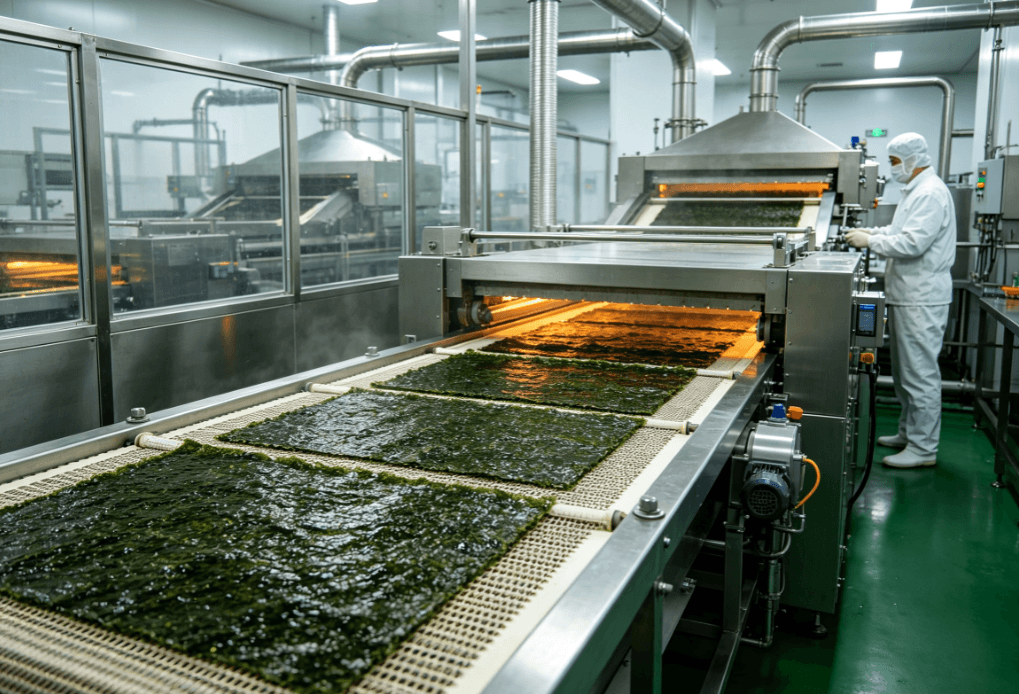
What Is Nori Food? Botanical Origins and Color Chemistry
To accurately define this ingredient, we must examine its biological foundation. The product originates as cultivated red marine algae grown in cold coastal waters. The marine plant develops a complex cellular structure supported by natural oceanic tidal cycles.
Consumers often wonder why this red algae ultimately appears dark green or black. The raw marine plant contains a photosensitive red pigment protein known as phycoerythrin. During high-temperature industrial roasting, this specific red pigment rapidly degrades.
Once the phycoerythrin breaks down, the naturally occurring green chlorophyll becomes visible. This thermal reaction creates the signature dark green appearance of commercial sheets. A darker, more opaque color typically indicates higher nutrient density and premium agricultural grading.
Raw Nori vs. Roasted Nori: Processing Differences
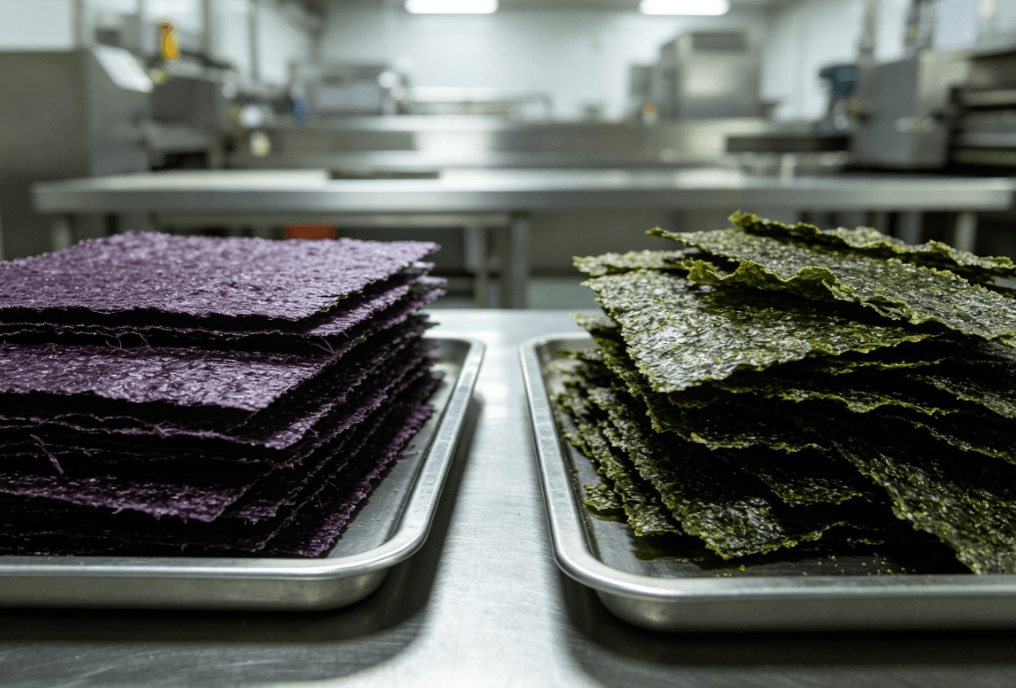
The commercial seaweed industry primarily categorizes this product by its thermal processing stage. Raw nori, known technically as Hoshi Nori, undergoes dehydration but avoids secondary roasting. It retains a dark purple hue and exhibits a slightly tough, fibrous texture.
Raw sheets require further thermal processing before direct human consumption. Industrial food facilities or culinary professionals must heat the material to unlock its final flavor profile. Unroasted sheets lack the brittle crispness required for automated sushi rolling.
Conversely, roasted nori (Yaki Nori) undergoes high-temperature processing at the manufacturing plant. Specialized infrared or gas roasters expose the sheets to temperatures exceeding 200°C. This alters the cellular matrix, resulting in a crisp texture and deep umami flavor.
The Industrial Manufacturing Workflow
Transforming raw algae into commercial food sheets requires precise factory automation. Harvested raw material degrades rapidly and demands immediate environmental stabilization. The manufacturing line relies on strict, sequential engineering processes.
The continuous production cycle typically includes these critical stages:
- Marine Washing: Utilizing freshwater agitation systems to remove ocean salinity and sand.
- Optical Sorting: Deploying high-speed camera sensors to eject foreign marine debris.
- Slurry Mincing: Mechanically chopping raw fronds into a highly uniform liquid suspension.
- Sheet Forming: Extruding the wet slurry onto continuous synthetic drying belts.
- Primary Dehydration: Routing porous mats through low-humidity, temperature-controlled drying tunnels.
- Thermal Roasting: Applying rapid, high-heat exposure to finalize the cellular structure.
Automated laser scanners inspect the final continuous web for dimensional accuracy. Sheets failing thickness tolerances or exhibiting microscopic tears are automatically rejected. These rejected sheets are often diverted into pulverized food additives.
Commercial Nori Types and Food Service Applications
Different manufacturing cuts and grades serve highly distinct food service applications. Tensile strength and moisture resistance dictate how the seaweed performs in commercial kitchens. Product specifications must align with the intended culinary workflow.
| Product Type | Physical Format | Primary Application | Structural Requirement |
| Yaki Nori | Standard full sheets | Maki and sushi rolls | High elasticity, tear-resistant |
| Temaki Cuts | Half or quarter sheets | Hand rolls, tacos | Extreme crispness, moderate flexibility |
| Onigiri Film | Pre-cut with plastic | Rice ball wrappers | Integrated moisture barrier films |
| Kizami Nori | Finely shredded strips | Noodle and salad garnish | Clean mechanical cuts, no clumping |
Standard full sheets act as a structural moisture barrier for vinegared rice. Pulverized formats function purely as savory flavor enhancers. Food manufacturers select specific types based on their automated processing machinery limits.
Safety Standards, Quality Control, and Packaging Engineering
Evaluating whether edible seaweed is safe requires reviewing facility testing protocols. Premium marine algae is highly nutritious, offering dense iodine, vitamins, and protein. However, responsible aquaculture demands strict heavy metal and biological pathogen testing.
Reliable B2B suppliers implement comprehensive supply chain traceability systems. For instance, producers like Haipu Sushi Nori focus heavily on hygienic manufacturing environments. They maintain controlled processing capabilities for standard sheets, seasoned varieties, and custom onigiri wrappers. Ensuring strict compliance with HACCP or ISO 22000 standards is non-negotiable for safe global distribution.
Proper storage engineering is equally critical due to the material’s hygroscopic nature. The roasted algae rapidly absorbs ambient humidity, which destroys its structural crispness.
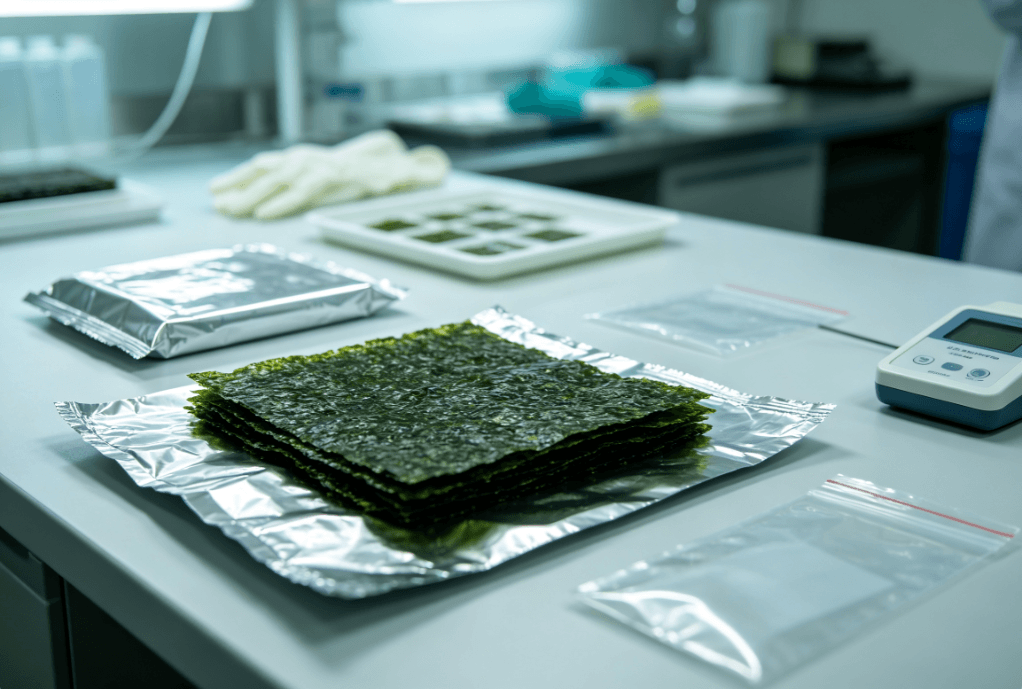
Commercial packaging utilizes multi-layer aluminum barrier films to block moisture transmission. Advanced facilities inject nitrogen gas and insert industrial desiccants before final heat sealing. Operators must store open products in airtight, temperature-controlled environments to prevent rapid oxidation.
FAQ
What exact plant species is used to make this food?
Commercial production relies almost exclusively on red algae from the Pyropia genus. Pyropia yezoensis and Pyropia tenera are the most commonly cultivated species due to their optimal flavor and structural resilience.
Is commercial seaweed safe to consume daily?
Yes, it is generally safe and highly nutritious, containing essential amino acids and trace minerals. However, because it contains concentrated iodine, consumption should be moderated within daily recommended dietary limits. Verified suppliers test raw materials to ensure heavy metals remain below safe regulatory thresholds.
How do you properly eat or prepare commercial sheets?
Roasted Yaki Nori is fully processed and ready for immediate consumption straight from the packaging. It requires no further cooking and is primarily used to wrap rice, garnish soups, or consume directly as a dried snack.
Why does my seaweed become extremely chewy after opening?
The processed sheets possess a moisture content typically below five percent. They are highly hygroscopic and will instantly absorb environmental humidity from the air. This moisture absorption causes the rigid cellular structure to collapse, resulting in a chewy texture.
What gives this ingredient its distinct savory taste?
The unique flavor profile is driven by a high natural concentration of glutamic acid. This specific amino acid is the primary biological compound responsible for umami. The ocean environment also infuses the plant with complex marine salts and minerals.
Reference Sources
- Food and Agriculture Organization of the United Nations (FAO) – Taxonomy and Aquaculture of Pyropia Species.
- U.S. Food and Drug Administration (FDA) – FSMA Preventive Controls for Human Food in Aquaculture Manufacturing.
- International Organization for Standardization (ISO) – ISO 22000: Food Safety Management Systems.
- ASTM International – Standard Test Methods for Water Vapor Transmission Rate Through Flexible Barrier Materials.