

Seasoned nori and sushi nori are both made from edible seaweed, but they serve different product goals. Sushi nori is usually plain roasted seaweed, while seasoned nori receives added oil, salt, soy sauce, or other flavoring.
For importers, foodservice buyers, private-label brands, and restaurant chains, understanding seasoned nori vs sushi nori is essential. The right choice affects taste, production performance, packaging, shelf life, and customer positioning.
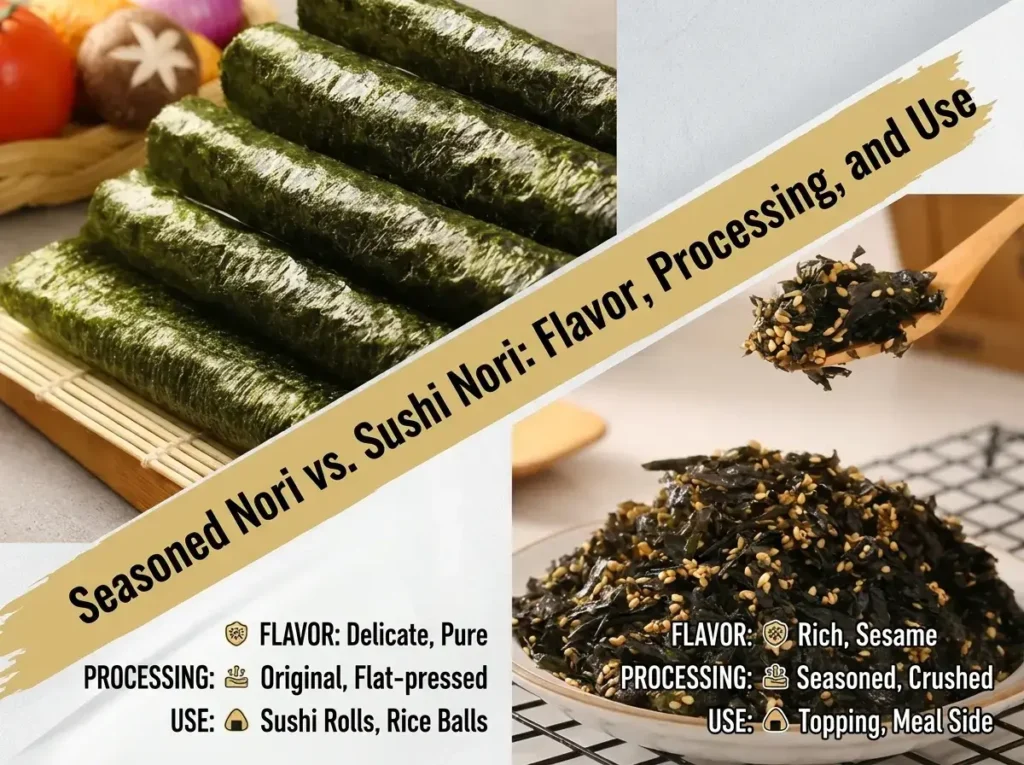
What Is the Difference Between Seasoned and Unseasoned Nori?
The main difference between seasoned and unseasoned nori is the level of post-roasting processing.
Sushi nori is produced for wrapping, layering, or food preparation. It must provide balanced flavor, reliable flexibility, and sufficient strength during handling.
Seasoned nori is developed as a ready-to-eat product. It is often roasted, coated with oil and seasoning, dried again, and cut into convenient portions.
Sushi Nori
Sushi nori is commonly used for:
- Maki rolls and hand rolls
- Onigiri and rice balls
- Temaki cones
- Restaurant meal kits
- Sushi trays and prepared foods
- Food manufacturing applications requiring plain seaweed sheets
Its flavor is typically mild, naturally savory, and slightly oceanic. The product does not usually contain added oil or strong seasoning.
Seasoned Nori
Seasoned nori is designed to deliver immediate flavor and crispness. Common ingredients include:
- Sesame oil or refined vegetable oil
- Salt
- Soy sauce powder or liquid seasoning
- Sugar or other flavor-balancing ingredients
- Spices, mushroom seasoning, or seafood flavoring
In commercial food production, the formula may be adjusted for different markets. For example, a private-label brand may request lower salt, stronger sesame aroma, or a seasoning profile suitable for children.
Seasoned Nori vs Sushi Nori: Comparison Table
| Dimension | Sushi Nori | Seasoned Nori |
|---|---|---|
| Flavor Profile | Mild, naturally savory, lightly oceanic, and umami-rich | Richer, saltier, more aromatic, and often sesame-forward |
| Ingredients | Primarily roasted seaweed | Roasted seaweed with oil, salt, soy seasoning, or other flavorings |
| Processing Method | Washing, forming, drying, and controlled roasting | Roasting followed by seasoning spray, drying, cutting, or filling |
| Primary Uses | Sushi rolls, onigiri, temaki, and foodservice preparation | Snacks, rice toppings, bibimbap, lunchbox products, and retail packs |
| Moisture Standard | Commonly controlled within a low-moisture range, often below 3–5% | Requires equally strict control, especially after oil and seasoning application |
| Texture Goal | Flexible enough for wrapping, while retaining clean bite | Crisp, light, and immediately consumable |
| Packaging Focus | Protection from humidity and loss of flexibility | Strong moisture and oxygen protection to preserve crispness |
| Typical Buyer | Sushi restaurants, food manufacturers, and catering suppliers | Snack brands, supermarkets, wholesalers, and private-label buyers |
The comparison shows why seasoned nori vs sushi nori is not simply a flavor question. The two products are manufactured for different handling, packaging, and consumption conditions.
How Does Processing Affect Quality?
Processing determines whether nori remains flexible for wrapping or becomes crisp enough for direct consumption.
Sushi Nori Processing
Sushi nori production generally includes several controlled stages:
- Raw seaweed selection: Manufacturers evaluate color, thickness, fiber density, aroma, and visual uniformity.
- Cleaning and preparation: The raw material is cleaned to remove unwanted particles and prepared for forming.
- Sheet forming: Seaweed is distributed into a controlled mold to achieve consistent dimensions and thickness.
- Drying: Moisture is reduced under controlled conditions.
- Roasting: Roasting tunnels develop aroma, color, texture, and final crispness.
- Inspection and packing: Sheets are checked for size, holes, contamination, and appearance before packaging.
High-grade sushi nori often requires a suitable balance between fiber density and flexibility. If the sheet is too fragile, it may crack during rolling. If it is too thick, it may become difficult to bite or fold.
Seasoned Nori Processing
Seasoned nori usually requires additional processing after roasting:
- Automated seasoning spray or coating
- Controlled oil distribution
- Secondary drying or baking
- Flavor uniformity checks
- Sheet cutting or portioning
- Optional sandwiching or filled-sheet production
- Moisture-barrier packaging
The coating must be distributed evenly. Excess oil can create greasy surfaces, uneven flavor, or reduced shelf stability. Insufficient drying may cause the product to lose its crisp texture during storage.
For buyers comparing seasoned nori vs sushi nori, the seasoning system is a major technical consideration. A factory should be able to control spray volume, drying temperature, seasoning adhesion, and batch consistency.
Raw Material Grade: Which Nori Is Better for Commercial Use?
There is no single “best” nori grade for every application. The correct raw material depends on the product’s intended use and target price.
Grade A Sushi Nori
Higher-grade sushi nori typically emphasizes:
- Consistent sheet color
- Fine and even fiber structure
- Suitable flexibility
- Clean aroma
- Smooth appearance
- Reliable performance during rolling
Restaurants and premium sushi manufacturers may prioritize appearance and bite quality. Private-label sushi products may require a balance between grade and cost.
Snack-Grade Nori
Snack-grade nori may be selected for:
- Crispness
- Strong roasted aroma
- Efficient seasoning absorption
- Consistent cutting performance
- Competitive cost
- Compatibility with retail packaging
Snack-grade material does not necessarily mean poor quality. It may be optimized for seasoning, direct consumption, or smaller pieces rather than sushi presentation.
When sourcing seasoned nori vs sushi nori, procurement teams should request product specifications instead of relying only on grade names. Useful specifications include sheet weight, thickness, moisture, color range, breakage rate, seasoning coverage, and packaging format.
Why Do Moisture and Crispiness Matter?
Moisture control is one of the most important quality factors in both products.
Nori naturally absorbs moisture from the surrounding environment. High humidity can reduce crispness, create a chewy texture, and accelerate quality deterioration.
In many commercial specifications, finished nori moisture is controlled within a low range, commonly below 3–5%. The exact limit should be confirmed according to the product formula, destination-market requirements, and internal quality standards.
Recommended Moisture-Control Measures
A reliable manufacturing and packaging system may include:
- Controlled drying and roasting conditions
- Moisture testing for every production batch
- Rapid cooling before final packing
- Aluminum foil or metallized moisture-barrier bags
- Food-grade desiccant where appropriate
- Heat-sealed inner packaging
- Carton protection during transport
- Storage away from heat, humidity, and direct sunlight
For seasoned nori, oil and seasoning ingredients can affect texture stability. The supplier should evaluate water activity, packaging performance, and shelf-life behavior rather than moisture percentage alone.
Commercial Uses and Purchasing Decisions
The best choice depends on how the product will be consumed.
Choose Sushi Nori When You Need:
- A neutral seaweed wrapper
- Flexible sheets for sushi production
- A clean base for customer-added sauces
- Consistent dimensions for automated filling lines
- Plain ingredients for restaurant or meal-kit applications
- A product that can be paired with rice, seafood, vegetables, or sauces
Choose Seasoned Nori When You Need:
- A ready-to-eat retail snack
- A flavored topping for rice or noodles
- A product for bibimbap or Asian meal kits
- A child-friendly lunchbox item
- A stronger aroma and more immediate taste
- A private-label snack with differentiated seasoning
For restaurant chains, product selection may involve both categories. Sushi nori can support kitchen production, while seasoned nori can be sold as a packaged side item or retail add-on.
For wholesalers, pack size and format are equally important. Options may include full sheets, half sheets, small snack strips, individual sachets, bulk catering packs, and display-ready retail cartons.
How Haipu Food Supports B2B Nori Sourcing
Lianyungang Haipu Food Co., Ltd. is a seaweed manufacturer based in Lianyungang, an important production area for nori and related seaweed products.
Its modern production base covers more than 20,000 square meters and includes over 100 sets of automated equipment. The product portfolio includes:
- Sushi Nori
- Seasoned Nori for Rice
- Seasoned Seaweed Snacks
- Shredded Nori
Haipu Food can support different B2B requirements, including foodservice supply, wholesale distribution, private-label development, and customized seasoning programs.
Its brands include Puno Tai and HaddieBear, while export-related certifications and qualifications include ISO9001, HACCP, Halal, SGS, and Export Food Manufacturer Registration.
For buyers evaluating seasoned nori vs sushi nori, factory capability matters as much as the product sample. A qualified supplier should provide traceability, batch documentation, packaging information, and clear communication about minimum order quantities.
FAQ for Importers and Foodservice Buyers
What Is the Typical Shelf Life of Sushi Nori and Seasoned Nori?
Shelf life depends on the recipe, packaging, moisture level, oil stability, and storage conditions. Properly sealed products commonly achieve a shelf life of several months to more than one year, subject to validated testing.
Buyers should request the supplier’s official shelf-life specification and recommended storage conditions.
How Is Moisture Controlled During Production and Shipping?
Manufacturers control moisture through drying, roasting, cooling, and final-product testing. Aluminum foil or metallized packaging helps reduce humidity transfer during storage and transport.
Desiccants may be added when suitable for the pack format and destination-market requirements.
Can Seasoning, Packaging, and Sheet Size Be Customized?
Yes, customization may include seasoning intensity, oil type, salt level, sheet size, cutting style, packaging material, artwork, and retail or foodservice format.
The required MOQ depends on the recipe, packaging method, printing process, and production setup.
What Export Compliance Documents Should Buyers Request?
Importers should confirm the documents required by the destination market. Common supporting materials may include HACCP documentation, ISO9001 certification, Halal certification, SGS inspection reports, product specifications, test reports, and export registration records.
Additional requirements may apply under local food safety, labeling, allergen, and import regulations.
Industry Quality and Compliance Standards Cited
Relevant standards and verification systems may include:
- HACCP: Identifies and controls food safety hazards throughout production.
- ISO9001: Supports documented quality management and process consistency.
- Halal Certification: Confirms compliance with applicable halal production requirements.
- SGS Inspection or Testing: Provides independent inspection, testing, or verification services.
- FDA Requirements: May apply to products entering the United States, including facility registration, labeling, and food safety compliance.
- Metal Detection and X-Ray Inspection: Helps identify metallic and selected foreign-material risks.
- Traceability Systems: Connect raw materials, processing batches, packaging, and shipment records.
The practical difference between seasoned nori vs sushi nori lies in their intended use, formulation, processing, and quality targets. Sushi nori is optimized for wrapping and food preparation, while seasoned nori is designed for flavor, crispness, and direct consumption.
For reliable B2B sourcing, buyers should evaluate raw material grade, moisture performance, seasoning consistency, packaging protection, certifications, and factory traceability together.