

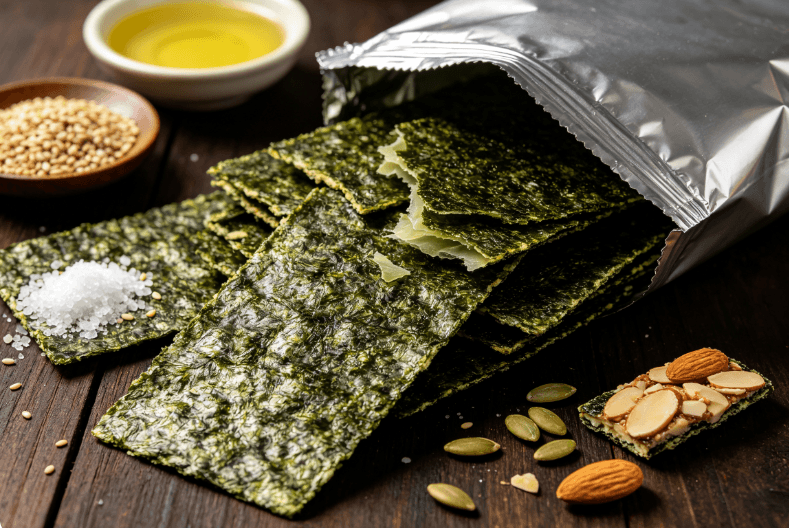
Seaweed snacks are roasted, seasoned sheets of edible red algae, primarily harvested from the Pyropia or Porphyra marine plant species. Manufacturers process raw ocean algae into paper-thin layers before baking them at high temperatures. This creates a distinct, crispy texture. These snacks serve as a low-calorie, mineral-rich alternative to traditional grain-based foods. Formulators typically season them with sesame oil, sea salt, or complex spices.
When consumers ask what are seaweed snacks, they are usually referring to commercial “nori.” Nori is the Japanese term for these specific edible seaweed sheets. While traditionally used for wrapping sushi, the snack variant undergoes specific secondary processing. Snack-grade seaweed requires lower moisture content and specialized flavor adhesion techniques compared to standard culinary nori.
The Biological Origin of Nori Sheets
Snack seaweed does not come from random ocean plants. Commercial production relies on specific red algae strains cultivated in coastal aquaculture farms. Farmers grow these spores on nets suspended in cold, nutrient-rich seawater.
The growth cycle requires precise water temperatures and tidal movement. Once the algae blades reach maturity, harvesting boats trim the tops of the plants. This allows the base to regenerate for multiple harvests per season. The raw material at this stage is wet, highly perishable, and requires immediate industrial processing.
The Commercial Manufacturing Workflow
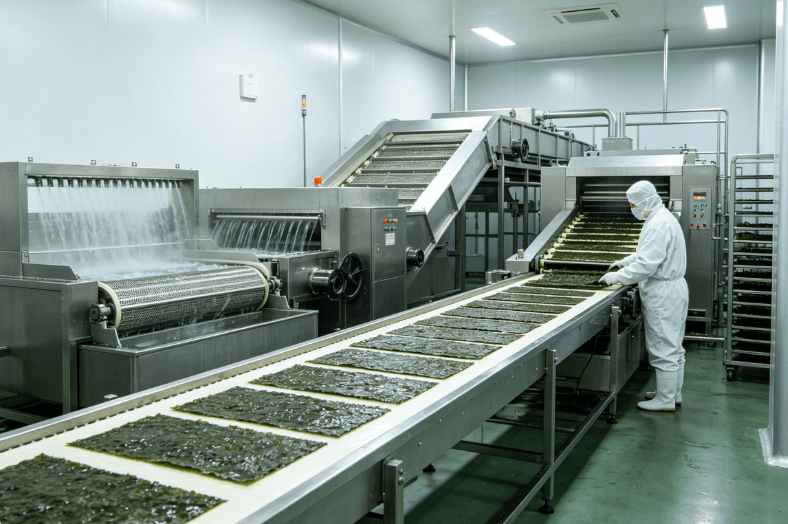
Transforming raw algae into a shelf-stable snack requires precision engineering. The timeline from ocean harvest to preliminary drying is critical to prevent bacterial degradation. If you want to understand the exact industrial mechanics, reviewing what is nori food and how commercial nori is made provides deep insight into the production cycle.
The standard factory workflow includes:
- Washing: High-volume freshwater sprayers remove ocean debris, sand, and unwanted marine organisms.
- Mincing: Industrial blades chop the wet algae into uniform, microscopic pieces.
- Slurry Creation: The minced seaweed mixes with fresh water to create a liquid suspension.
- Sheet Forming: Machines pump the slurry over porous mesh screens to form thin, wet sheets.
- Initial Drying: Heated tunnels reduce the sheet moisture content to around 18 percent.
- Roasting: Specialized ovens bake the sheets at temperatures exceeding 250°C (482°F) for seconds.
- Seasoning: Automated rollers apply precise layers of oil and powder seasonings.
- Cutting and Packaging: The large sheets are cut into snack-sized strips and immediately sealed.
Market Varieties and Flavor Profiles
The snack market has evolved far beyond basic salt and oil preparations. Manufacturers now utilize secondary processing to create complex textures and nutritional profiles.
Standard variations include:
- Classic Roasted: Lightly brushed with sesame or olive oil and dusted with sea salt.
- Tempura Seaweed: Coated in a light batter and flash-fried for extreme crunch.
- Teriyaki or Spicy: Infused with liquid soy glazes, chili powders, or wasabi extracts.
- Layered Inclusions: Two sheets of nori bound together with a filling.
The layered category represents the latest industry innovation. Many modern facilities now produce fruit and vegetable nori. These products feature pumpkin seeds, almond slivers, or dried fruit embedded between two crispy seaweed layers. This technique requires specialized edible binders and precise moisture control to maintain crunch.
Nutritional Profile and Consumption Limits
Seaweed snacks offer a unique macronutrient and micronutrient balance. They are inherently low in carbohydrates and fats before seasoning. The primary nutritional value comes from their mineral density.
Key Nutritional Components
| Nutrient | Typical Benefit | Processing Impact |
| Iodine | Supports thyroid function. | Remains stable during high-heat roasting. |
| Vitamin B12 | Aids nerve function. | Rare plant-based source of bioavailable B12. |
| Dietary Fiber | Supports digestion. | Largely preserved during the mincing and drying phases. |
| Protein | Tissue repair. | Makes up nearly 30% of the dry weight of raw nori. |
Despite these benefits, consumption requires balance. Overconsumption can lead to excessive iodine intake, which may disrupt thyroid stability. Formulators must also monitor sodium levels, as aggressive salt seasoning can negate the health benefits. Evaluating nori healthy nutrition facts, benefits, and limits is crucial for dietary planning.
Packaging Requirements for Shelf Stability
Moisture is the primary enemy of roasted seaweed. Nori is highly hygroscopic. It will rapidly absorb moisture from the surrounding air. If the internal moisture content exceeds 5 percent, the snack loses its snap and becomes unpleasantly chewy.
To prevent this, commercial packaging relies on advanced barrier films. Manufacturers use multi-layer aluminum foil laminates to block moisture vapor transmission. Every retail package also requires a silica gel desiccant packet. This packet actively absorbs any residual moisture trapped inside the bag during the sealing process. Proper packaging ensures a stable shelf life of 12 to 18 months under ambient conditions.
Frequently Asked Questions
Are seaweed snacks vegan?
Yes, standard roasted seaweed snacks are 100% plant-based. However, some seasoned varieties may use fish sauce, shrimp powder, or honey. Always verify the ingredient list for specific flavorings.
Do seaweed snacks contain high levels of heavy metals?
Ocean plants can absorb trace metals from their environment. Reputable manufacturers source raw algae from certified, unpolluted coastal waters. Commercial factories conduct rigorous lab testing to ensure arsenic and lead levels remain well below FDA limits.
How many seaweed snacks can I eat in a day?
Nutritionists generally recommend 1 to 2 standard snack packs (about 5-10 grams) per day. This provides beneficial iodine and vitamins without exceeding daily sodium or iodine thresholds.
Why do seaweed snacks go soft after opening?
Nori acts like a sponge for atmospheric humidity. Once the protective foil seal breaks, the sheets absorb moisture from the room. You must consume the product immediately after opening to experience the intended crispy texture.
Reference Sources
- Food and Agriculture Organization (FAO): “Cultured aquatic species information programme – Pyropia yezoensis.” Provides biological data on commercial seaweed aquaculture.
- U.S. Department of Agriculture (USDA): FoodData Central. Contains baseline nutritional profiling and macronutrient breakdowns for dried edible seaweed.
- National Institutes of Health (NIH): Office of Dietary Supplements. “Iodine Fact Sheet for Health Professionals.” Details the dietary importance and upper intake limits of iodine found in marine algae.