

If you are wondering exactly what does seaweed snack taste like, the flavor is primarily savory, deeply umami, and distinctively salty with a mild roasted oceanic aroma. The physical texture is paper-thin, delivering a sharp crispness that immediately melts on the tongue. Because commercial facilities roast the raw algae at high temperatures, the final product develops nutty and earthy notes rather than an overpowering or raw fishy flavor.
To fully understand this complex flavor profile, you have to look at the natural biology of red algae and the industrial food processing methods used to manufacture it.
The Science Behind the Savory Flavor
The defining characteristic of roasted seaweed (nori) is umami. This is the fifth basic human taste, often described as a deep, meaty, or broth-like richness. Nori naturally contains extremely high levels of glutamic acid, an amino acid that functions as a natural flavor enhancer.
When you eat a seaweed snack, human taste receptors detect this glutamate, triggering a satisfying, mouth-watering sensation. This is the exact same chemical mechanism that makes aged Parmesan cheese, soy sauce, or roasted mushrooms taste so appealing.
Aside from umami, the secondary taste is naturally salty. Marine algae absorb trace minerals directly from seawater, including sodium, iodine, and iron. Most manufacturers also apply a light dusting of finely milled sea salt during processing to amplify these natural mineral notes.
How Industrial Roasting Changes the Taste
Raw Pyropia (the red algae species used for nori) does not taste like a commercial snack. In its natural state, it is chewy and smells strongly of low-tide marine biology. The sensory transformation occurs entirely during the roasting and seasoning phases on the production line.
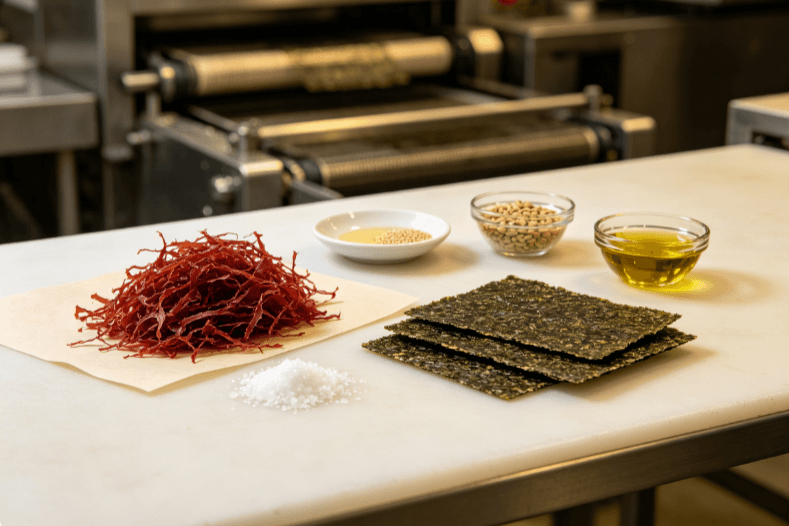
Industrial baking machines expose the dried seaweed sheets to temperatures ranging from 200°C to 250°C for brief, highly controlled intervals. This thermal processing triggers the Maillard reaction—a chemical interaction between amino acids and reducing sugars. This browning process strips away the raw biological odor and replaces it with a warm, toasted, and slightly nutty flavor.
The choice of cooking oil applied before roasting also dictates the final sensory experience:
- Sesame Oil: Imparts a heavy, aromatic, and distinctly Asian flavor profile.
- Sunflower or Canola Oil: Provides a neutral background, allowing the natural ocean minerals to dominate.
- Olive Oil: Adds a very subtle, fruity earthiness to the finish.
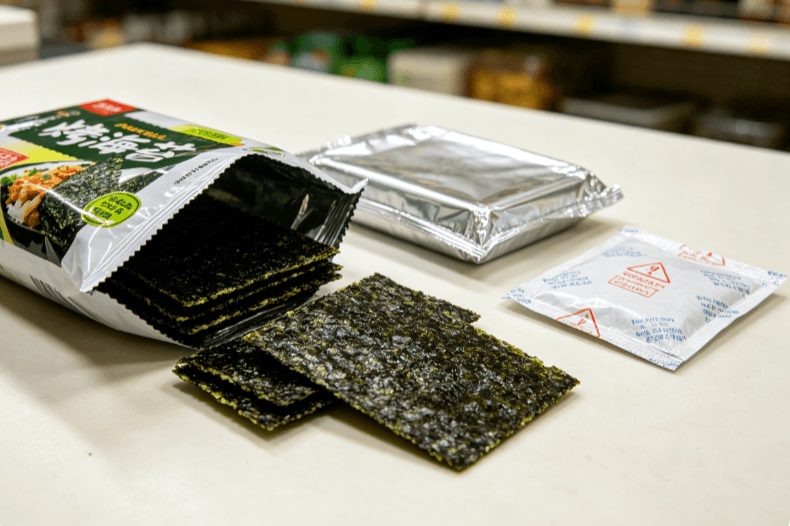
Moisture control is equally critical to the taste. A premium seaweed snack must maintain a moisture content below 5%. If ambient humidity enters the packaging, the cellular structure of the nori softens. This destroys the crisp texture and causes the essential oils to taste muddy or flat.
Modern Flavor Innovations: Sweet, Spicy, and Layered
While sea salt and sesame remain the baseline, modern food manufacturing has expanded the sensory possibilities of nori. Snack factories now utilize advanced tumbler drums to coat seaweed sheets in diverse, dry-powdered seasonings without introducing moisture.
Wasabi powder adds a sharp, sinus-clearing heat that cuts through the rich umami. Teriyaki glazing introduces a sweet-and-salty dynamic by applying a thin layer of sugar and soy before a secondary bake.
Manufacturers are also utilizing natural produce to create entirely new flavor categories. Specialized production lines now manufacture fruit and vegetable nori, combining natural plant sweetness with traditional marine umami. These products often feature finely milled pumpkin, coconut, or root vegetables layered directly onto the seaweed. The mild sweetness of the vegetable ingredients perfectly balances the high-sodium impact of the ocean algae, creating a highly complex, satisfying crunch.
| Snack Variation | Dominant Taste | Texture Profile | Sensory Finish |
| Traditional Sea Salt | Salty, intense umami | Brittle snap, rapid melt | Clean, mineral ocean finish |
| Sesame Roasted | Earthy, nutty, warm | Lightly oily, crisp | Lingering toasted aroma |
| Vegetable Layered | Sweet, savory, hearty | Thick, dense crunch | Balanced, mild umami |
| Wasabi Coated | Pungent, spicy, savory | Sharp snap | Fast-fading heat |
Practical Ways to Experience the Flavor
Because of its concentrated savory notes, nori acts as a powerful flavor enhancer for domestic cooking. Exploring how to eat seaweed snacks extends far beyond just eating them straight out of the bag.
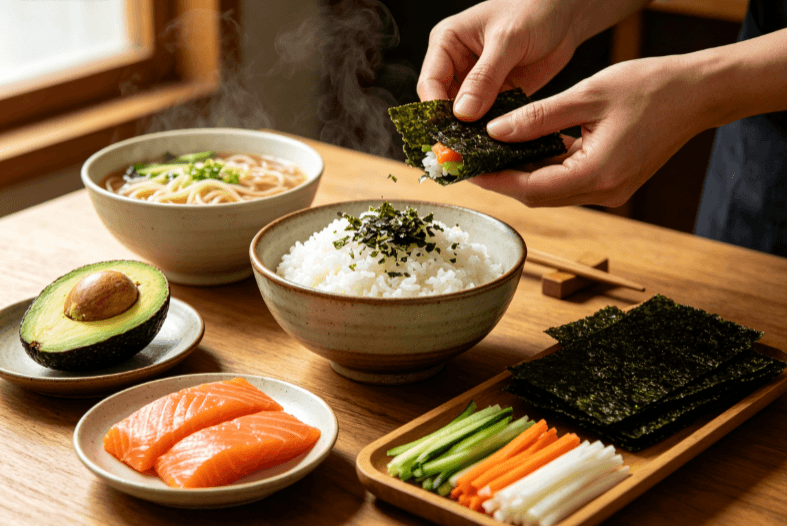
The heat from warm foods immediately alters the texture and flavor release of the snack. Crushing a few sheets over a hot bowl of steamed rice or noodle soup causes the seaweed to slightly rehydrate. This steam instantly releases the volatile aromatic oils, intensifying the roasted scent.
You can also use whole sheets as a low-carbohydrate wrap for raw vegetables, avocado, or smoked salmon. The crisp saltiness of the seaweed provides a necessary textural contrast to soft, mild fillings.
Why Does Some Seaweed Taste Fishy or Stale?
A common hesitation for first-time consumers is the fear of a “fishy” taste. High-quality, properly processed seaweed snacks should possess a clean, oceanic breeze scent. If a product tastes aggressively fishy, sour, or rancid, it usually indicates a failure in raw material handling or packaging integrity.
Lipid oxidation is the most common culprit. The natural lipids (fats) in the algae, combined with the roasting oils, are highly sensitive to oxygen and UV light. If the factory packaging lacks a proper nitrogen flush, or if the foil barrier is compromised, these oils oxidize rapidly on supermarket shelves. This chemical degradation creates stale, rancid off-flavors that consumers mistakenly identify as a “fishy” taste. Always verify that the packaging is tightly sealed and check the expiration date to ensure peak flavor.
FAQ
Is a seaweed snack sweet or salty?
The baseline flavor is distinctly salty and savory. However, certain commercial variations, such as teriyaki-glazed or fruit-infused nori, incorporate natural or added sugars to create a blended sweet-and-salty profile.
Why do some seaweed snacks leave a metallic aftertaste?
Marine algae naturally bio-accumulate trace minerals from the ocean, including iron and iodine. Depending on the specific harvest location and water temperature, a high concentration of natural iron can occasionally leave a very faint, harmless metallic note on the palate.
Does roasted nori taste exactly like kelp or wakame?
No. Nori (Pyropia) is exceptionally thin and naturally mild, with a delicate umami flavor. Kelp (Kombu) and Wakame belong to different algae families; they are much thicker, require boiling to eat, and possess a significantly stronger, heavier ocean flavor.
Does the roasting process destroy the natural taste of the seaweed?
Roasting does not destroy the taste; it chemically alters it. The high heat eliminates the raw, biological odors of the wet algae and activates the Maillard reaction. This enhances the glutamic acid profile, converting a raw plant into a savory, toasted snack.
Reference Sources
- Umami Information Center: Scientific literature on the presence of naturally occurring glutamate in Pyropia (nori) species and its effect on human taste receptors.
- Food and Agriculture Organization (FAO): Technical guidelines on the commercial harvesting, drying, and thermal processing of edible marine algae.
- Journal of Food Science and Technology: Peer-reviewed studies on lipid oxidation in roasted seaweed snacks and its direct impact on off-flavor development during shelf storage.
- USDA FoodData Central: Nutritional profiles detailing the natural sodium, iodine, and trace mineral content in commercially processed roasted seaweed products.