

Nori sheets are a fundamental component in global seafood and Asian cuisine. Their crisp texture and dense umami flavor rely entirely on proper handling. Understanding exactly how to use nori sheets requires knowledge of their physical properties.
Professional chefs and commercial food manufacturers treat roasted seaweed with strict environmental controls. Nori is highly hygroscopic. It absorbs ambient humidity within minutes of exposure. This rapid moisture absorption changes its cellular structure.
A perfectly roasted sheet snaps cleanly. A compromised sheet becomes chewy and difficult to bite through. We will explore the technical preparation methods, application techniques, and storage standards used in professional kitchens.
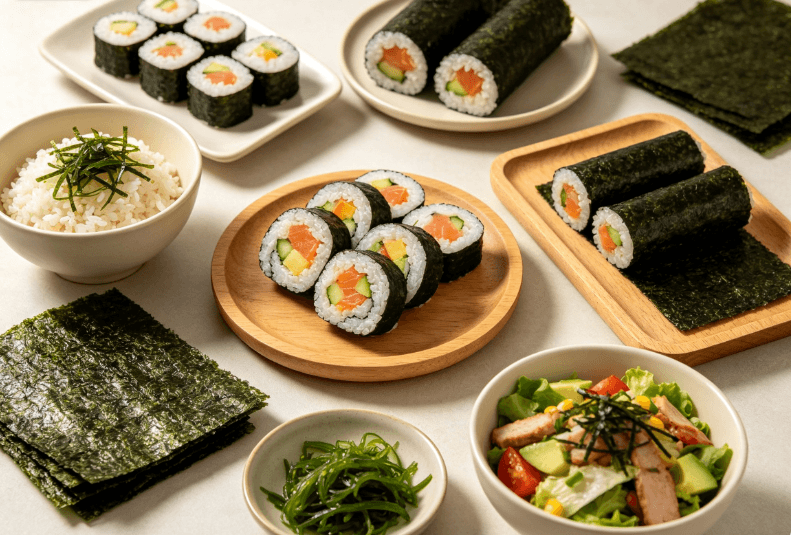
How to Handle and Prepare Nori Sheets Properly
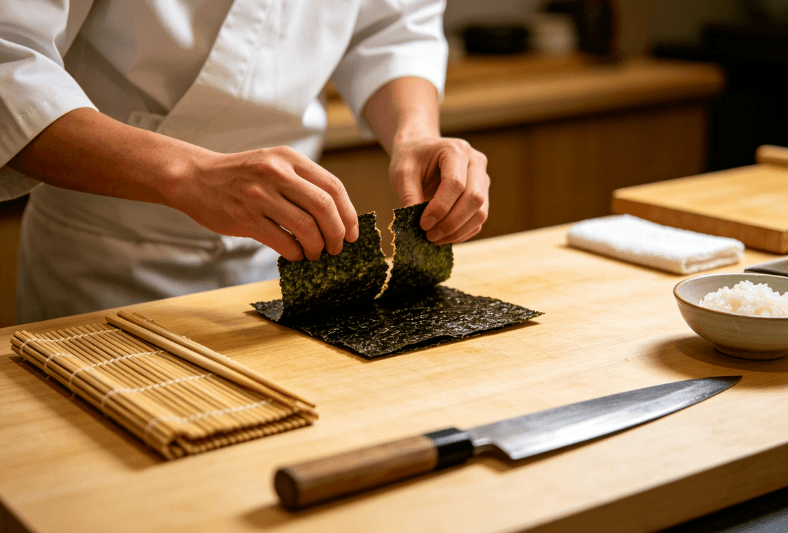
Handling seaweed correctly dictates the success of your culinary application. Every standard sheet has two distinct surface textures. The shiny side is smooth and visually appealing. The rough side is matte and slightly textured.
When constructing sushi, the shiny side must always face outward. You place your cooked rice directly onto the rough side. This structural design serves a specific mechanical purpose. The textured surface creates friction and grips the starches in the rice.
This grip ensures optimal adhesion during the rolling process. Working quickly is essential to maintain structural integrity. Extended exposure to warm, moist rice will prematurely soften the seaweed. Chefs prepare their rolling stations in advance to minimize assembly time.
Culinary Applications: From Maki Rolls to Rice Bowls
Versatility makes roasted seaweed an essential ingredient in various food service sectors. Different meals require specific sizing and cutting techniques. Using sharp, dry blades prevents the material from tearing.
Here are the most common ways to apply it in everyday meals:
- Maki Sushi (Rolls): Use full or half sheets to encase rice and raw fish tightly.
- Onigiri (Rice Balls): Wrap rectangular strips around molded rice to prevent sticky fingers.
- Nigiri Bands: Cut thin strips to mechanically secure delicate toppings to rice beds.
- Temaki (Hand Rolls): Fold half-sheets into rigid cones to hold loose ingredients.
- Garnishes: Shred off-cuts to add umami flavor to ramen, poke bowls, and salads.
Understanding Nori Grades and Factory Specifications
Industrial food processing categorizes seaweed using a strict grading system. Raw materials undergo rigorous washing, mechanical chopping, and automated drying. Standardized far-infrared roasting achieves a precise moisture content below 5%.
Commercial grading relies on color, thickness, and the absence of structural defects.
| Nori Grade | Color & Texture | Primary Application | Tensile Strength |
| Gold (A) | Deep black-green, completely uniform | Premium restaurant sushi, complex rolls | High (Resists tearing) |
| Silver (B) | Dark green, minor microscopic gaps | Standard sushi rolls, hand rolls | Medium-High |
| Green (C) | Lighter green, visible light passing | Garnishes, rice bowls, processing | Medium |
Industrial food safety requires rigorous quality control. Modern facilities utilize heavy-duty metal detectors and X-ray scanners. These systems eliminate foreign contaminants before the final vacuum packaging phase.
How to Keep Nori Sheets Crispy During Storage
Storage mechanics are just as important as preparation techniques. Once you open a factory-sealed package, the countdown begins. Ambient moisture will immediately initiate structural degradation.
To prevent this, store unused sheets in a heavy-duty airtight container. Always retain the industrial silica gel desiccant provided by the manufacturer. Place this packet inside your storage vessel to absorb trapped humidity.
Keep the container in a cool, dark pantry. Avoid refrigeration under all circumstances. Moving products between cold refrigerators and room-temperature kitchens causes immediate condensation. This moisture migration will ruin the crispness instantly.
Sourcing Restaurant-Grade Sushi Nori
High-quality manufacturing directly impacts how seaweed performs in commercial and domestic kitchens. Premium production lines maintain strict environmental controls to preserve cellular integrity. Consistent roasting temperatures dictate the final flavor profile and structural snap.
Sourcing reliable products is crucial for consistent culinary results. For example, Haipu Sushi Nori provides carefully graded products engineered for different food service applications. Their premium grades offer the high tensile strength required for tight, complex sushi rolling.
A robust manufacturing environment ensures these quality metrics remain consistent. Viewing a modern factory show reveals the automated technology behind the scenes. Enclosed cleanroom processing and rapid vacuum packaging prevent premature moisture exposure. This guarantees standard crispness from the factory floor to your kitchen.

Frequently Asked Questions
Do you need to toast nori sheets before using them?
Most commercially available sheets are pre-roasted during manufacturing. They are ready to use straight from the package. However, passing an older sheet quickly over an open flame can temporarily restore lost crispness.
Why is my seaweed sheet chewy instead of crispy?
Chewiness indicates excessive moisture absorption. This happens when the package is left open in a humid environment. It also occurs if the sheet sits on wet rice for too long before consumption.
Can you eat nori sheets safely without cooking them?
Yes, standard sushi seaweed is fully processed, roasted, and sterilized at the factory. It is entirely safe for direct consumption as a snack or a raw wrap.
What is the shelf life of an unopened package?
Unopened packages stored in cool, dry conditions typically last 12 to 18 months. The heavy-duty vacuum seal and included desiccants prevent moisture migration and oxidation during transit.
Does thickness affect how to use nori sheets?
Yes, thicker sheets withstand the pressure of tight rolling and dense ingredients. Thinner sheets are better suited for light garnishes, soups, or immediate snacking where tensile strength is less critical.
Reference Sources
- ISO 22000:2018 – Food safety management systems requirements for organizations in the food chain.
- FDA Food Code – Guidelines for the safe handling, storage, and processing of dried food products.
- Global Food Safety Initiative (GFSI) – Benchmarking requirements for automated packaging and foreign object detection in dried seafood.