

What Defines High-Quality Commercial Sushi Nori?
Selecting the right seaweed directly impacts your culinary consistency. Poor quality nori easily tears during preparation. It can also turn unpleasantly chewy when exposed to rice moisture. B2B buyers must evaluate physical characteristics before placing bulk orders.
A reliable sushi nori supplier will provide products meeting strict physical criteria. You should look for specific indicators of proper cultivation and roasting. High-quality commercial nori typically features the following traits:
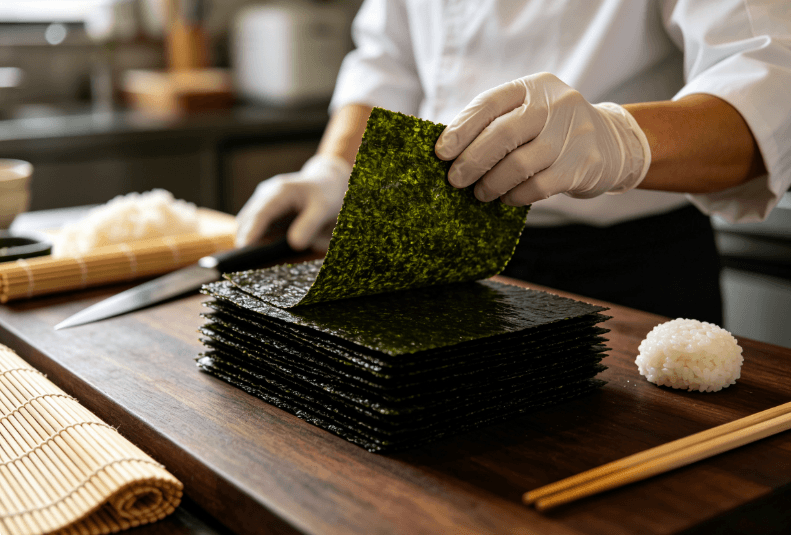
- Color Profile: Deep, dark green bordering on black indicates premium chlorophyll content.
- Texture Uniformity: The sheet should possess an even thickness without visible holes.
- Crispness Level: Sheets must snap cleanly when folded in half.
- Surface Finish: One side should be highly glossy, while the other remains textured.
- Flavor Profile: A distinct umami taste without excessive fishiness or bitterness.
For large-volume production, consistency across batches is crucial. A single variance in thickness can disrupt automated processing equipment. Procurement teams must request specification sheets detailing these parameters.
Decoding the Nori Grading System for Food Service
Commercial sushi nori relies on a standardized color-coded grading system. This system dictates the primary application and cost of the seaweed. Choosing the wrong grade often leads to unnecessary expenses. It can also result in sub-optimal presentation.
A knowledgeable sushi nori supplier will guide you through these classifications. Each grade offers specific performance tradeoffs. Your selection must align with your price point and application.
| Grade Category | Visual Characteristics | Best Commercial Application | Relative Cost |
| Gold (A Grade) | Jet black, high gloss, flawless | High-end sushi bars, premium dining | Highest |
| Silver (B Grade) | Dark green, slight variations | Casual dining, standard maki rolls | Moderate |
| Green (C Grade) | Lighter green, minor imperfections | Takeout sushi, large volume buffets | Lower |
| Blue (D Grade) | Pale green, thin spots present | Processing, garnishes, budget rolls | Lowest |
High-end dining establishments almost exclusively utilize Gold grade. Casual restaurants frequently blend Silver and Green grades to optimize food costs. Always test samples in your actual kitchen environment before committing.
Moisture Control and Processing Standards
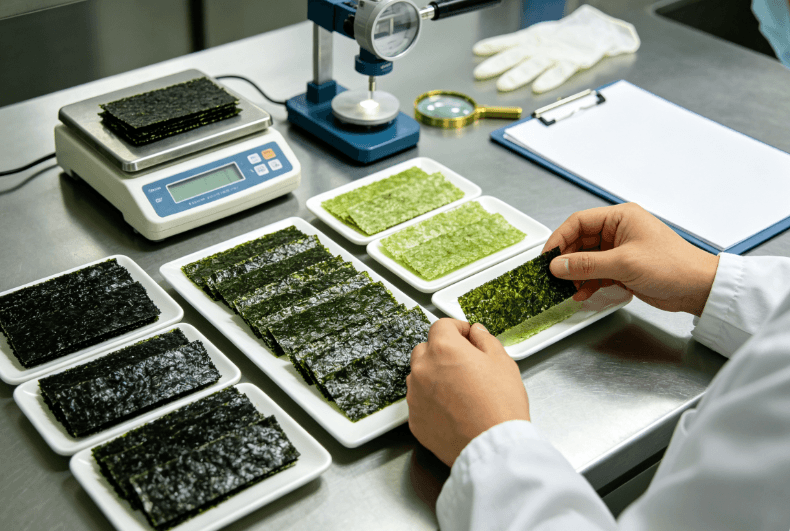
Moisture is the primary enemy of roasted seaweed. Improper moisture control during manufacturing drastically reduces shelf life. It also destroys the essential crisp texture required for sushi. B2B buyers must understand a supplier’s processing parameters.
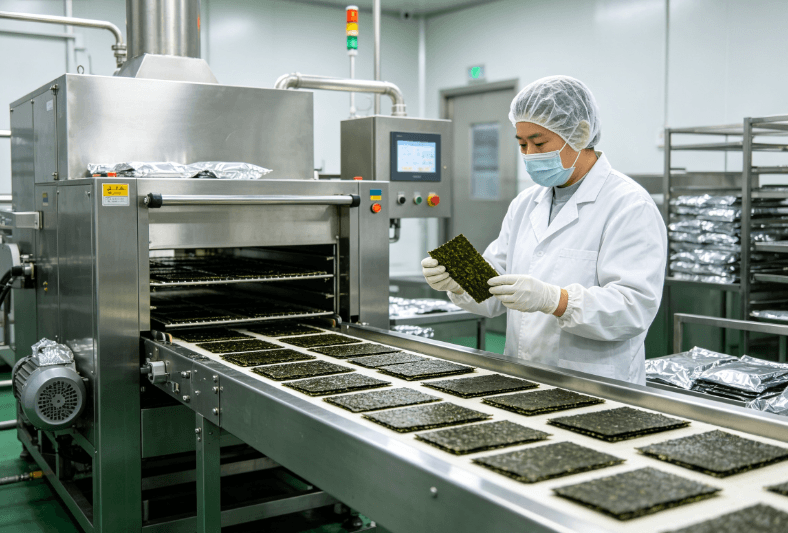
Raw seaweed undergoes a primary drying phase followed by secondary roasting. During secondary roasting, temperatures generally exceed 150°C. This critical step develops flavor and eliminates residual moisture. Final moisture content must remain strictly below 5%. Ideally, premium sheets target a 3% to 4% moisture range.
Packaging technology plays a massive role in maintaining these levels. Bulk orders should utilize high-barrier aluminum foil bags. Heavy-duty desiccants must be included in every commercial package. If a sushi nori supplier uses standard poly bags, avoid them. Simple plastics offer insufficient barrier protection against ambient humidity.
Key Metrics When Evaluating a Sushi Nori Supplier
Evaluating a sushi nori supplier requires looking beyond per-sheet pricing. Supply chain disruptions can quickly halt your food service operations. A robust vetting process minimizes commercial risk.
You must evaluate their compliance and production capabilities. Quality systems separate standard brokers from top-tier manufacturers. Consider the following B2B procurement metrics:
- Food Safety Certifications: Require GFSI-recognized certifications like BRC, SQF, or ISO 22000.
- Traceability Systems: The factory must trace batches back to the specific coastal farm.
- Production Capacity: Ensure their monthly output can support your peak seasonal demands.
- Minimum Order Quantities (MOQ): Verify if their MOQs align with your inventory turnover rate.
- Lead Times: Calculate manufacturing time plus international shipping delays.
Frequent testing for heavy metals and marine pollutants is non-negotiable. Request recent third-party laboratory analysis reports. Legitimate suppliers will provide these documents without hesitation.
Application Matching: Sourcing for Different Formats
The physical format of the seaweed must match your preparation method. Ordering full sheets for a specialized application wastes labor hours. Pre-cut formats significantly improve kitchen efficiency.
Automated sushi robots require highly specific physical tolerances. Seaweed that is too thin will tear under mechanical pressure. Thicker Silver or Gold grades generally withstand automated rolling best.
For hand rolls (temaki), half-cut sheets offer the best operational flow. Onigiri production requires specialized film-wrapped individual sheets. This specialized film prevents moisture transfer until the consumer opens it. Discuss your exact preparation workflow with your supplier. They can often customize cutting dies to match your exact dimensions.
Streamlining Your B2B Procurement with Haipu Sushi Nori
Selecting a manufacturing partner requires finding flexibility and strict quality control. You need an operation capable of supporting custom requests and volume scaling. Consolidating your procurement through a specialized platform reduces supply chain friction.
When evaluating potential manufacturing partners, Haipu Sushi Nori provides comprehensive commercial solutions. They maintain strict roasting protocols to ensure optimal crispness and flavor. Their catalog supports various grading requirements tailored to different food service models.
Procurement managers can review their sushi nori specifications to match internal quality targets. If you require OEM packaging or specific cut dimensions, their team accommodates custom configurations. You can easily discuss volume requirements and initiate an RFQ directly through their support portal.
FAQ
What is the standard shelf life for commercial sushi nori?
When stored in unopened, moisture-barrier packaging, roasted seaweed typically lasts 12 to 18 months. Once opened, it should be kept in an airtight container and used within a few days to prevent moisture absorption.
Why does my sushi nori supplier require a high MOQ for custom packaging?
Custom packaging requires printing bespoke aluminum foil bags. Packaging manufacturers impose minimum print runs, which your seaweed supplier must pass on to you. Standard unbranded packaging usually offers much lower MOQs.
How can I verify the food safety of a bulk seaweed purchase?
Always request a Certificate of Analysis (COA) for the specific batch you are purchasing. Additionally, verify their facility holds active certifications like HACCP, ISO 22000, or BRC.
What causes seaweed to become chewy instead of crispy?
Chewiness is a direct result of moisture exposure. This happens if the factory failed to dry it below 5%, or if ambient humidity breached the packaging. Poor kitchen storage also rapidly degrades crispness.
Reference Sources
- Food and Agriculture Organization (FAO) – Cultivation and Processing of Marine Macroalgae.
- International Organization for Standardization (ISO) – ISO 22000: Food Safety Management Systems.
- Safe Quality Food Institute (SQFI) – SQF Code for Food Manufacturing.
- U.S. Food and Drug Administration (FDA) – Hazard Analysis and Critical Control Point (HACCP) Principles.