

To eat seaweed snacks effectively in everyday meals, you can consume them directly from the packaging, fold them around warm short-grain rice, or crumble them over hot soups and salads immediately prior to serving. The core principle behind integrating these roasted sheets into a daily diet is strict moisture control. Because commercial nori undergoes high-temperature roasting, it develops a highly hygroscopic, fragile cellular structure that absorbs ambient water in seconds. If exposed to wet ingredients like ramen broth or dressed greens too early, it rapidly degrades into a soggy paste. By introducing the seaweed at the absolute last moment, you preserve its intended structural snap while leveraging its naturally high glutamate concentration to deliver a concentrated hit of umami to otherwise simple dishes.
Why Are Seaweed Snacks So Versatile?
Roasted seaweed, primarily cultivated from Pyropia species, relies on a highly controlled manufacturing process to achieve its final state. The drying and roasting phases create a porous surface that holds light seasonings—typically just sea salt and sesame or olive oil—without requiring heavy saturation.
This minimal processing preserves a distinct flavor foundation. The naturally occurring amino acids bridge savory, sweet, and spicy culinary notes effortlessly. Because the product avoids the heavy oil loads found in traditional potato or corn-based chips, it acts as a clean, low-calorie flavor enhancer that doesn’t overpower the primary ingredients of a meal.
Creative Ways on How to Eat Seaweed Snacks
While direct consumption from the tray is the most common use case, functional integration maximizes their utility in the kitchen. The exact application depends heavily on the temperature and moisture level of the base food.
Here are proven mechanical methods to incorporate nori into your routine:
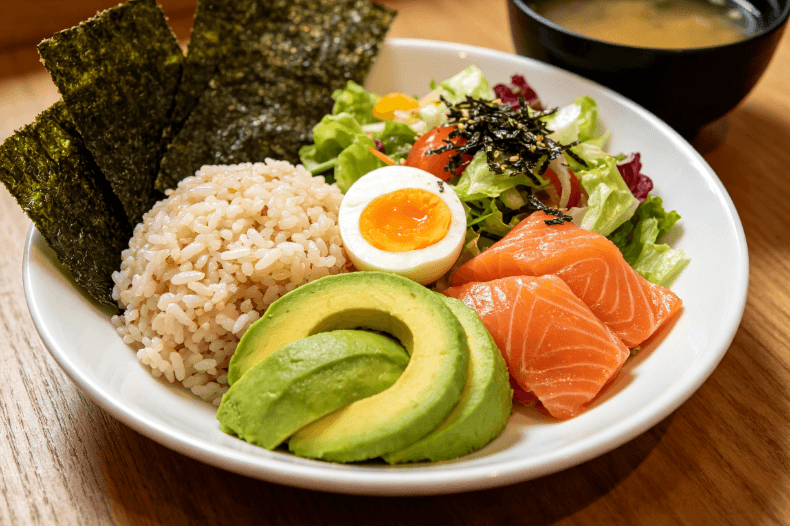
- Sushi Rice Wraps: Use a crisp sheet as a physical barrier to grip warm, sticky rice and avocado without dirtying your hands.
- Soup Garnishes: Drop shredded strips into hot miso or bone broth right before eating to release the oceanic flavor profile.
- Textural Salad Toppings: Crumble roasted sheets over fresh greens as a gluten-free replacement for dense bread croutons.
- Savory Baking: Blend pulverized seaweed directly into flour mixes to create umami-rich doughs for crackers or breads.
- Poke Bowl Base: Utilize thicker nori squares as a functional scoop for diced raw fish and spicy mayonnaise.
Elevating Meals: Best Application Scenarios
Different meal categories require specific application strategies to protect the material’s delicate crunch. Temperature differentials also play a role; steam from freshly cooked proteins will compromise the structural integrity of the seaweed just as quickly as direct liquid contact.
The following table outlines optimal pairing strategies based on typical moisture constraints:
| Meal Type | Application Method | Ideal Ingredient Pairing | Expected Texture Result |
| Breakfast | Folded as a wrap | Scrambled eggs, smoked salmon | Soft interior, crisp shell |
| Lunch | Crumbled topping | Quinoa salads, poke bowls | Crunchy, contrasting bite |
| Dinner | Sliced as a garnish | Ramen, udon, pho | Semi-soft, rapid flavor release |
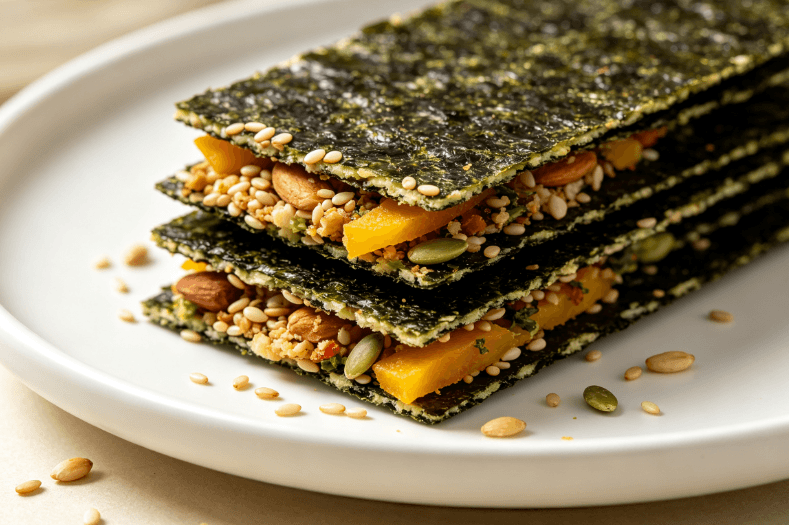
| Snack | Layered sandwich | Almonds, sesame seeds | Dense, highly crunchy |
Exploring Modern Fruit and Vegetable Nori Snacks
Food processing capabilities have expanded well beyond the traditional single-layer salted sheet. Advanced manufacturing lines now produce complex, multi-layered seaweed composites that fundamentally change how the snack is consumed. These structural innovations offer a thicker bite and high resistance to fracturing.
For example, modern fruit and vegetable nori utilizes a specialized binding process to trap nuts, sesame seeds, or dehydrated fruit slices between two distinct layers of seaweed. This specific lamination technique creates a balanced, multi-dimensional flavor profile. It successfully merges the savory umami of the ocean with the natural botanical sweetness and dense crunch of the internal fillings.
Understanding exactly what seaweed snacks are—and the manufacturing differences between single-layer and composite styles—helps consumers select the right variant. These layered, thicker variants possess a much higher structural integrity. They are exceptionally well-suited for standalone snacking, rigorous travel conditions, or pairing with premium charcuterie boards where standard thin sheets would easily tear.
Dietary Compatibility and Nutritional Value
Nori inherently aligns with strict dietary frameworks due to its minimal ingredient profile. The standard roasting process keeps the final product naturally gluten-free. It remains a fundamental staple in vegan and vegetarian diets, acting as one of the few plant-based sources that naturally replicates savory meat profiles.
Low-carb and ketogenic dietary planners utilize seaweed as a zero-carb vehicle for healthy fats. The high dietary fiber content supports digestion without triggering insulin spikes. This renders it an optimal functional food for precise metabolic management.
Additionally, the marine growth environment infuses the cellular walls with highly bioavailable iodine. This essential trace mineral is a critical component for synthesizing thyroid hormones. Regular consumption provides vital micronutrients that are historically difficult to source from standard terrestrial agriculture.
Maintaining Texture: Moisture Control Tips
As established, nori is highly hygroscopic. Once a factory-sealed package is opened and exposed to ambient humidity above 40%, the crispness begins to degrade almost instantly.
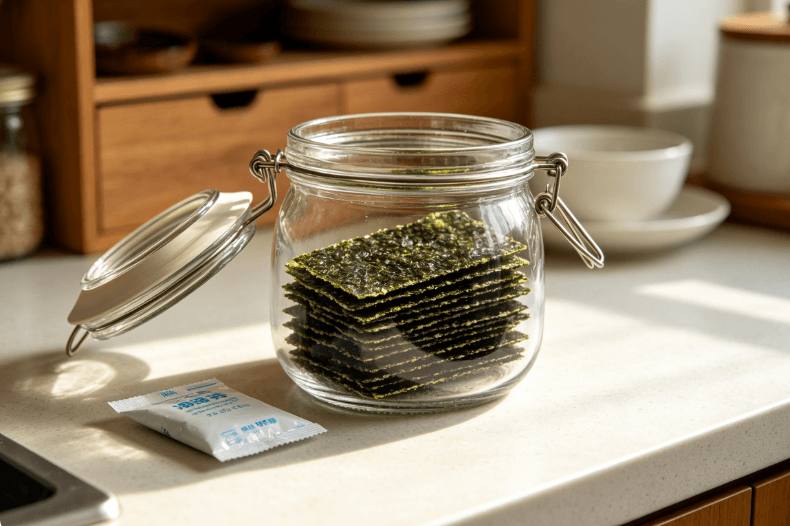
Always transfer unused portions into dedicated airtight containers immediately. Retain the commercial silica gel desiccant packet found in the original packaging and place it inside your storage vessel; this actively traps residual moisture. Never store roasted seaweed in the refrigerator, as the temperature fluctuations will inevitably introduce condensation directly onto the sheets.
For hot culinary preparations, timing is everything. Always apply the seaweed immediately before the dish is consumed. Proper handling ensures you experience the specific textural snap that the manufacturers intended.
FAQ
Can I eat seaweed snacks every day?
Yes, daily consumption is safe and nutritionally advantageous for most individuals. However, due to the naturally high iodine concentration, individuals with preexisting thyroid conditions should consult a medical professional to establish a safe baseline intake.
Do seaweed snacks lose their crispness quickly?
Yes, roasted nori degrades rapidly when exposed to ambient humidity. The porous structure pulls moisture from the air, causing it to lose its crispness within hours. Always utilize airtight storage containers with desiccant packets to maintain the original texture.
What is the best way to eat layered fruit and vegetable nori?
Because of its laminated manufacturing process, layered nori is best consumed directly as a standalone snack. The internal binders and dried fruits provide a structural thickness that resists crumbling, making it ideal for eating on the go or pairing with dry cheeses.
Can I use regular seaweed snacks for making sushi?
Standard snack-sized sheets are structurally too fragile and small for rolling traditional maki sushi. They are manufactured specifically for direct consumption or small hand rolls. Traditional rolled sushi requires thicker, unseasoned, full-sized grade-A nori sheets.
Are roasted seaweed snacks suitable for a keto diet?
Yes, traditional roasted seaweed contains virtually zero net carbohydrates. It functions as an excellent keto-friendly delivery mechanism for high-fat pairings like avocado, macadamia nuts, or sesame oil. Always verify the nutritional label on flavored variants to ensure no sugars were added during processing.
Reference Sources
- U.S. Food and Drug Administration (FDA): Dietary Reference Intakes for Iodine and Trace Minerals in Marine Products.
- USDA FoodData Central: Nutritional profiles, glutamate concentrations, and structural composition of raw and roasted Pyropia (nori) species.
- Journal of Food Science and Technology: Studies on the hygroscopic properties, cellular degradation, and moisture barrier packaging requirements of roasted marine plant products.