

Sushi Nori Grades Explained: How to Compare Quality for Wholesale Buying
Sushi nori grades categorize roasted seaweed sheets by color, cellular structure, and structural integrity. Wholesale buyers compare these tiers—typically labeled Gold, Silver, or Green—by evaluating tensile strength against the desired flavor profile. Selecting the correct grade ensures automated rolling machines run without jamming while maintaining the expected consumer mouthfeel.
Commercial grading directly impacts both unit economics and manufacturing efficiency. High-volume procurement teams must balance aesthetic requirements with mechanical reliability. Over-specifying raw materials wastes capital on delicate sheets that may not survive heavy processing. Under-specifying results in a chewy texture that damages brand reputation.
For procurement managers establishing baseline expectations, understanding the technical differences prevents costly errors during mass production. Reviewing a foundational guide to nori sheets for sushi helps clarify how raw seaweed is processed and why thickness variations fundamentally alter both hand-rolling and machine processing capabilities. Export facilities translate traditional Japanese numerical grading systems into standardized color designations to streamline global B2B sourcing.
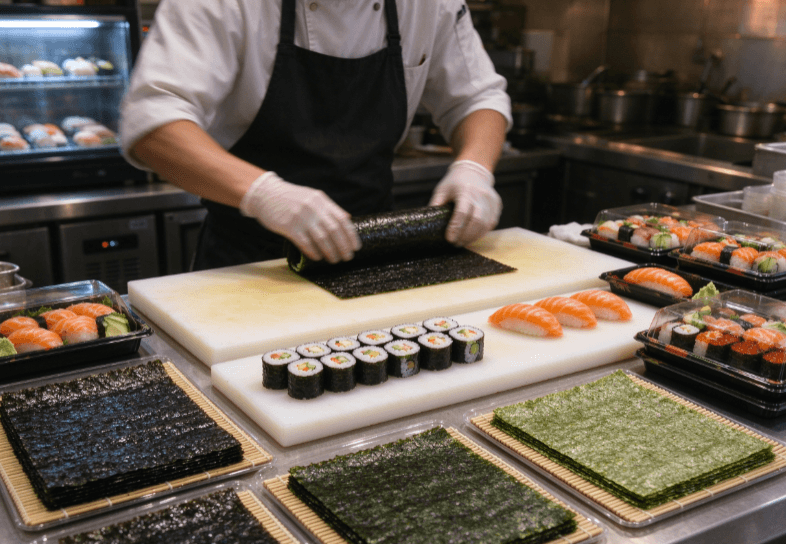
What Drives Nori Grading in Commercial Manufacturing
Nori evaluation begins immediately upon harvest during the winter months. Inspectors grade raw batches based on chlorophyll density, natural surface sheen, and microscopic defect rates. Early harvests yield the most delicate cellular structure and highest nutrient profiles.
First-harvest material produces premium sheets characterized by a deep, jet-black appearance. Successive harvests produce progressively thicker sheets with higher structural toughness and a lighter green hue. The specialized secondary roasting process then locks in the final moisture content and umami levels.
Quality assurance teams evaluate specific physical criteria to streamline bulk sourcing:
- Surface gloss and jet-black color density
- Instant dissolvability without residual chewiness
- Absence of microscopic holes or ragged edges
- Consistent sheet weight and uniform thickness
These factors determine how the material behaves under mechanical stress. A highly rated sheet melts instantly on the palate but requires careful manual handling. Lower-rated sheets withstand aggressive handling but require more chewing effort.
Mechanical Properties vs. Flavor: Material Selection for Automation
In large-volume production, dimensional consistency often outranks subjective flavor nuances. Sushi robots and automated maki machines operate on strict thickness tolerances. Equipment calibration fails when sheet thickness varies significantly between production runs.
Moisture control strictly dictates the structural integrity of bulk nori during processing. Standard industrial specifications mandate a moisture content strictly below four percent. Exceeding this limit causes immediate loss of crispness and triggers rapid oxidation.
| Specification Tier | Color & Surface Sheen | Cellular Texture | Mechanical Tensile Strength | Primary Commercial Use Case |
| Gold (A) | Jet Black, High Gloss | Highly brittle, melts instantly | Low – requires delicate handling | Fine Dining, Premium Nigiri |
| Silver (B) | Dark Green, Medium Gloss | Crisp, minimal chewing | Medium – handles standard tension | High-Volume Restaurant Maki |
| Blue (C) | Green, Low Gloss | Thicker, noticeably chewy | High – resists tearing easily | Supermarket Sushi Boxes |
| Green (D) | Light Green, Matte | Thick, very high chewiness | Very High – maximum durability | Processed Garnishes, Flakes |
Thicker lower-grade sheets provide superior tensile strength for heavy-duty applications. This makes them highly resilient in demanding mechanical workflows where delicate sheets would shatter. Engineering teams must test sample rolls on actual factory equipment before finalizing wholesale contracts.
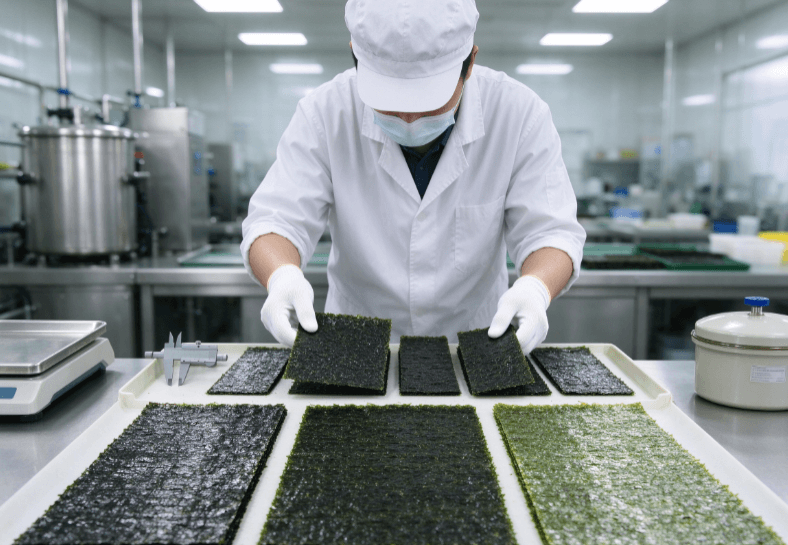
Gold, Silver, and Green Nori in High-Volume Food Service
Selecting the precise tier depends entirely on the final culinary or retail application. A product destined for immediate consumption requires different specifications than one sitting in a refrigerated display.
Gold-grade applications represent the pinnacle of commercial seaweed utilization. This tier is mandatory for premium omakase settings and high-end hand rolls. The delicate material degrades rapidly upon contact with warm, seasoned rice. It cannot withstand prolonged moisture exposure.
Silver-grade serves as the standard workhorse for traditional restaurant environments. It balances an attractive dark aesthetic with excellent structural stability for line cooks. Most high-volume operations rely on this tier for consistent daily performance.
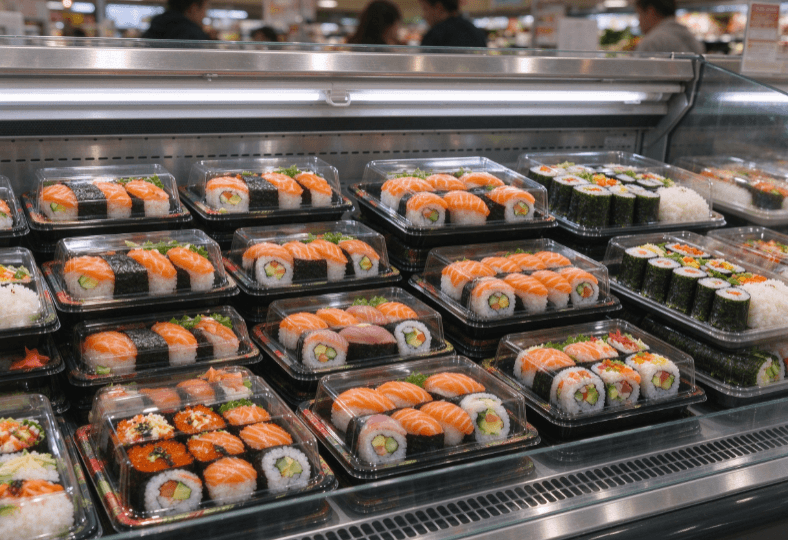
Blue and Green grades suit supermarket logistics and pre-packaged bento boxes across US retail chains. The thicker structure actively resists moisture transfer during prolonged refrigerated transport. Many seasoning blenders also utilize these robust grades for bulk furikake manufacturing.
US Import Compliance and OEM Supplier Evaluation
Sourcing seaweed for the US market requires evaluating supplier capabilities beyond basic product grading. Reliable manufacturers must demonstrate robust supply chain traceability and foreign material exclusion programs. Optical sorting machines equipped with high-speed cameras are mandatory to detect irregular surface spots or foreign debris before packaging.
When vetting Asian manufacturers, procurement teams must verify FDA facility registration and FSMA compliance. These frameworks ensure the facility maintains hazard controls during the washing and high-temperature toasting phases. US Customs heavily scrutinizes imported food products lacking proper heavy metal and microbiological testing documentation.
Evaluating a manufacturer’s wholesale sushi nori catalog allows B2B buyers to verify sheet dimensions and packaging formats against their specific operational needs. Specialized suppliers simplify the procurement cycle by offering exact die cuts, custom sheet sizes, and tailored OEM packaging configurations. Buyers should establish clear MOQ expectations and lead times during the initial RFQ phase to account for potential West Coast port delays.
Proper packaging preserves the delicate roasting profile during trans-Pacific ocean freight. Bulk orders utilize heavy-duty AL/PE laminated foil bags with food-grade desiccant packets. This packaging provides an absolute barrier against oxygen and the high humidity of maritime shipping.
Frequently Asked Questions
What is the standard MOQ for custom OEM nori packaging?
Minimum order quantities for private label packaging typically start between 100 and 500 master cartons. This volume absorbs the initial tooling and printing costs for custom aluminum mylar bags. Smaller procurement runs often utilize blank foil bags with applied adhesive labels to reduce upfront investment.
How does maritime transit affect wholesale nori imports?
Improperly sealed bulk cartons absorb ambient humidity during prolonged ocean freight. This exposure degrades crispness and triggers premature oxidation of the seaweed. Suppliers must utilize heavy-duty desiccant packs and vacuum-sealed laminated barriers to prevent material degradation.
Can lower-grade nori run on automated sushi machines?
Yes, lower grades possess higher tensile strength due to their thicker, denser cellular structure. This makes them highly resistant to tearing under the mechanical tension of sushi robots. The resulting chewiness, however, may negatively impact the consumer experience if used in premium applications.
What certifications matter most for importing wholesale nori into the US?
Buyers must prioritize suppliers holding GFSI-recognized certifications like BRCGS or FSSC 22000. FDA facility registration and FSMA-aligned preventive controls are legally mandatory for shipments entering the United States. Routine heavy metal testing and pathogen screening records are necessary for smooth customs clearance.
Why do some sushi nori grades vary between manufacturers?
No centralized international governing body regulates export nori color names. A factory’s internal Silver grade might match another supplier’s Gold grade based on subjective sorting metrics and harvest timing. Procurement teams must rely on physical equipment testing rather than mere marketing labels.
Reference Sources
- Food and Drug Administration (FDA): Food Safety Modernization Act (FSMA) Preventive Controls for Human Food – Details mandatory compliance and hazard controls for processing facilities exporting to the US.
- International Organization for Standardization (ISO): ISO 22000 Food Safety Management Systems – Outlines global standards for hazard control and supply chain traceability in the food sector.
- Global Food Safety Initiative (GFSI): Manufacturing Standards – Benchmarking requirements for BRCGS and recognized food facilities managing dry goods.
- Food Safety Preventive Controls Alliance (FSPCA): Hazard Analysis Guidelines – Technical requirements on moisture control, water activity, and packaging barriers in dry food manufacturing.