

For buyers searching for sushi nori sheet sizes, the real question is usually practical: which specification will work in daily use, arrive in stable condition, and support repeat orders. The answer depends on product format, packaging, storage, and the buyer’s sales channel.
Common Sushi Nori Sheet Sizes
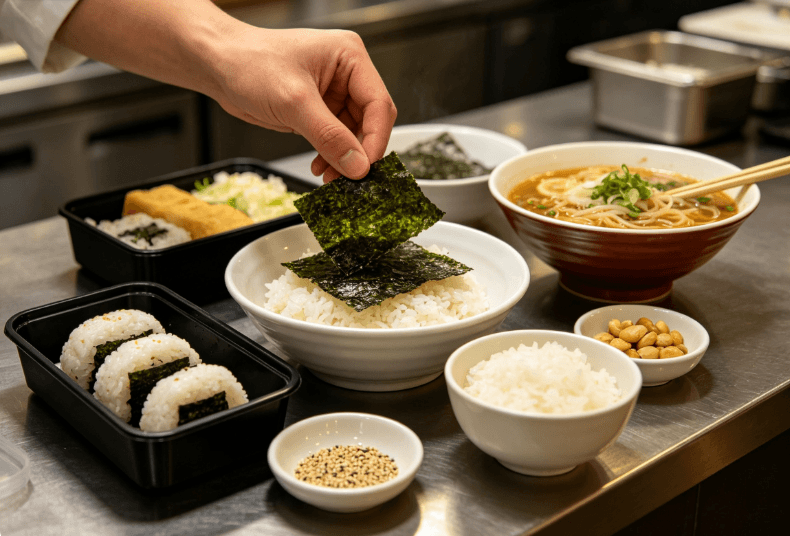
A full sushi nori sheet is the standard reference format for many sushi kitchens. It is commonly used for futomaki, standard rolls, and production lines where the chef or operator can cut the sheet according to the item being prepared.
Half-sheet sushi nori is often chosen for hand rolls, smaller maki rolls, and fast-service stations. For restaurants, the advantage is consistency: fewer manual cuts, cleaner prep, and less waste during peak hours.
When Custom Cuts Make Sense
Custom cuts are useful when a brand sells ready-to-eat snacks, rice ball wraps, lunchbox kits, or private-label retail packs. In those cases, the nori sheet is not only an ingredient but also part of the product experience.
Before ordering custom sizes, buyers should confirm tolerance, moisture protection, packaging quantity per inner bag, and whether the cut style affects edge cracking during transport.
How Buyers Should Select a Size
For restaurants, test the sheet size against the actual menu. A sheet that looks economical on paper may slow down prep if every unit needs trimming. For factories, check how the sheet fits into automatic feeding, wrapping, and sealing equipment.
Haipu’s Sushi Nori category can be used as the main product landing page for this topic, while the general products page can support buyers comparing sushi nori with other seaweed formats.
Page Role in the Topic Cluster
This article should work as a informational page with commercial bridge within the Sushi Nori cluster. Haipu already has supporting industry articles on nori grades, private-label seaweed snacks, choosing nori, shredded nori, fruit and vegetable nori, and seasoned nori. This page should therefore answer the exact search query first, then guide readers to the closest product category only when the buying path is clear.
Keyword overlap control: Keep the article educational, then add a light buyer path to the relevant product category. Do not over-push quotation language.
Procurement and Quality Checklist
| Check point | Why it matters | Buyer action |
| Sheet format | Full sheet, half sheet, retail pack, or catering pack should match the menu and prep workflow. | Request samples in the same size and pack count planned for the order. |
| Sensory quality | Color, aroma, crispness, rollability, and edge strength affect sushi presentation. | Test the sheet with real rice, fillings, and holding time, not only by visual review. |
| Packaging | Nori is sensitive to moisture, so inner bags and carton handling influence actual shelf performance. | Confirm inner pack quantity, sealing method, carton strength, and storage instructions. |
| Order documents | Importers may need labels, batch codes, shelf-life information, and food safety documents. | Ask for documentation before the first trial order, not after mass production starts. |
What to Add for a More Useful Buyer Experience
Because the search intent is mainly informational, the article should explain the concept clearly before moving into procurement details. This helps the page capture educational searches while still building a bridge to Haipu’s product categories.
The commercial bridge should be light: after explaining the topic, add buyer notes on format selection, packaging, storage, and sample review. This keeps the article helpful without making it feel like a product page.
Inquiry Guidance for Haipu
Invite readers to compare suitable formats on the product page or send their usage scenario for sample recommendations.
A good inquiry form or contact message can ask for product format, target country, expected pack weight, monthly or first-order quantity, branding needs, and destination-market documents. These details make the response more useful and reduce back-and-forth before a sample or quotation is prepared.
Suggested Internal Links
Sushi Nori | Products | Nori Sheet Uses
Buyer Takeaway
The best order is not simply the cheapest one. Buyers should match the product format, packaging, MOQ, and storage plan to the way the nori or seaweed snack will actually be sold or used.
FAQ
Is half-sheet nori only for hand rolls?
No. Half-sheet nori is also used for small maki, rice snacks, lunchbox items, and portion-controlled foodservice prep.
Should importers request custom cuts?
Custom cuts make sense when the buyer has a stable product format and wants to reduce labor, waste, or packaging inconsistency.
References
FAO Seaweed Trade: https://www.fao.org/fishery/publication/84680/en
USDA FoodData Central: https://fdc.nal.usda.gov/