

Sushi nori can remain fresh for several months or longer when stored unopened in properly sealed, moisture-resistant packaging. Its actual shelf life depends on processing, packaging materials, and storage conditions. Once opened, nori can lose its crispness within hours in humid environments. Keeping it dry, airtight, and away from heat is the most effective way to preserve its texture, color, and roasted flavor.
Unlike many fresh foods, dried sushi nori usually loses its desirable eating qualities before obvious signs of spoilage appear. A sheet may look normal but become chewy, lose its aroma, or tear during rolling.
Understanding these changes makes it easier to store nori properly, whether it is used occasionally at home or throughout the day in a sushi kitchen.
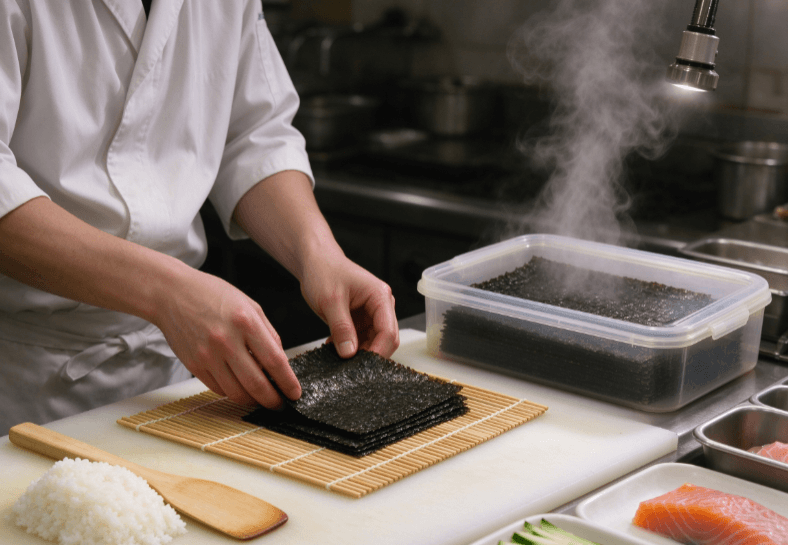
How Long Does Sushi Nori Last After Opening?
Unopened sushi nori generally has a longer usable storage period than opened nori because its packaging limits exposure to moisture and oxygen.
However, there is no single shelf-life figure that applies to every product. The manufacturer’s labeled best-before date should take priority over general estimates.
| Storage Condition | Expected Quality |
|---|---|
| Unopened, sealed packaging | Can retain quality for months or longer, depending on the validated shelf life |
| Opened, airtight container | Best used promptly; crispness may decline over time |
| Opened, humid environment | May soften within minutes or hours |
| Exposed to heat or sunlight | Greater risk of flavor and color deterioration |
| Refrigerated without proper sealing | Condensation may damage texture |
Roasted nori is particularly sensitive to humidity because of its thin, dried structure.
The processing method also matters. As explained in What Is Sushi Nori? A Guide to Nori Sheets for Sushi, nori is produced from edible seaweed through processing steps that form thin sheets suitable for sushi preparation.
Drying and roasting create the characteristic texture, but that texture can quickly change when moisture is absorbed.
Why Does Sushi Nori Lose Its Crispness?
Moisture absorption is the main reason dried nori becomes soft or chewy.
Nori is hygroscopic, meaning it absorbs water vapor from the surrounding air. When this happens, its dry structure becomes more flexible and loses the brittle texture associated with freshly roasted sheets.
This explains why a package left open near steaming rice can deteriorate much faster than one stored in a dry cupboard.
Moisture and Water Activity
Food scientists distinguish between moisture content and water activity (aw).
Moisture content measures the amount of water in a product. Water activity describes how available that water is for physical, chemical, and biological processes.
According to the U.S. FDA’s guidance on water activity, water activity is an important factor in food stability and microbial growth.
A 2013 study published in the Journal of Food Science examined dried laver stored at different water activities. Researchers found that higher water activity increased lipid oxidation and accelerated the degradation of certain antioxidants under the tested conditions.
These findings support the importance of keeping dried seaweed protected from moisture.
Oxygen, Temperature, and Light
Humidity affects texture, while oxygen and heat can contribute to chemical deterioration.
Over time, poorly stored nori may develop a weaker roasted aroma, duller color, or stale flavor.
Direct sunlight and elevated temperatures can further accelerate unwanted changes.
For these reasons, nori should be stored in a cool, dry, shaded environment rather than near cooking equipment or windows.
How to Store Sushi Nori Properly
The best storage method is straightforward: prevent humid air from reaching the sheets and minimize unnecessary handling.
Keep Unopened Nori in Its Original Packaging
Commercially packaged sushi nori sheets are supplied in different formats. Packaging construction can influence how well the product is protected during storage.
Unopened packages should remain sealed until needed.
Choose a storage area with stable temperatures, low humidity, and minimal exposure to sunlight.
Avoid keeping nori near sinks, dishwashers, steaming equipment, or other sources of moisture.
Reseal Opened Packages Immediately
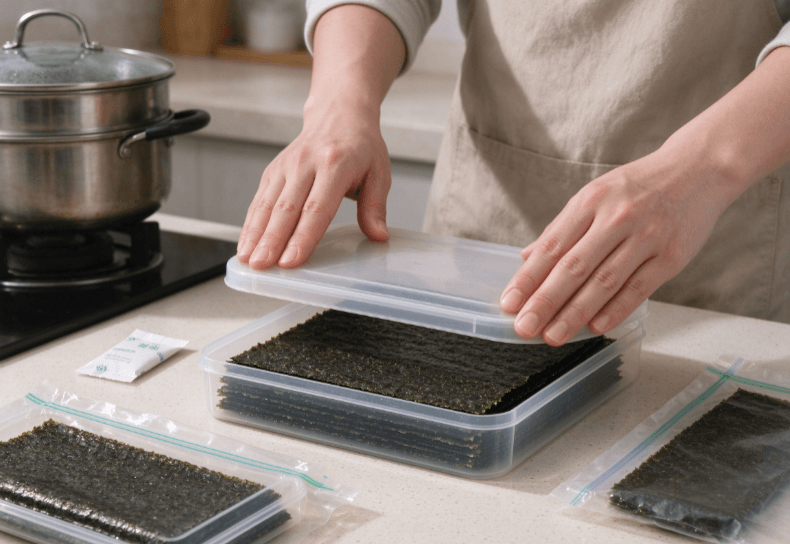
Once a package is opened, transfer unused sheets into an airtight container or a suitable resealable barrier pouch.
A rigid container is useful for preventing breakage, particularly when storing full-size sheets.
Where appropriate, an intact food-packaging desiccant supplied with the original product may help control residual moisture. Follow the manufacturer’s handling instructions.
For occasional use, portion size also matters. Smaller packs may reduce the number of times remaining sheets are exposed to air.
Different full-sheet and half-sheet formats are discussed in Haipu’s guide to sushi nori sheet sizes.
Is Refrigeration Necessary?
Refrigeration is generally unnecessary for properly dried, shelf-stable nori.
In fact, moving cold packaging into a warm kitchen can cause condensation when the package is opened.
If nori has been refrigerated or frozen, allow the sealed package to reach room temperature before opening it.
This reduces the risk of moisture condensing on the sheets.
How Packaging Affects Sushi Nori Shelf Life
Packaging performance is especially important for dried seaweed because moisture exposure can rapidly change the product’s texture.
Two packaging properties deserve particular attention:
- Water Vapor Transmission Rate (WVTR): Measures how much water vapor passes through packaging under specified test conditions.
- Oxygen Transmission Rate (OTR): Measures oxygen transmission through packaging material under specified conditions.
Lower transmission rates generally indicate stronger barrier performance, although final package quality also depends on sealing integrity.
| Packaging Type | Main Benefit | Important Consideration |
|---|---|---|
| Aluminum foil laminate | Strong moisture and light barrier | Seal integrity is essential |
| Metallized film pouch | Lightweight with potentially good barrier properties | Performance varies by film structure |
| Transparent plastic pouch | Allows product visibility | Moisture barrier depends on material |
| Airtight rigid container | Protects sheets from crushing | Requires an effective lid seal |
| Vacuum packaging | Reduces air within the package | Excessive vacuum may damage fragile sheets |
A moisture-resistant film alone does not guarantee long shelf life.
Poor heat sealing, small punctures, and repeated opening can undermine the protection offered by the packaging material.
For food processing operations, shelf-life evaluation may include water activity measurements, moisture analysis, sensory assessment, and packaging integrity checks.
These tests are more reliable than assuming a fixed expiration period based on packaging appearance.
Keeping Sushi Nori Fresh During Sushi Preparation
Even properly stored nori can soften quickly during food preparation.
In sushi restaurants, steam from rice and frequent package opening create conditions that differ considerably from dry storage.
The most effective approach is to keep the main supply sealed and remove only the sheets needed for immediate use.
A practical kitchen routine includes:
- Store unopened nori in a dry preparation or storage area.
- Remove only the required quantity before making sushi.
- Keep remaining sheets in a covered container.
- Avoid leaving nori beside steaming rice or wet surfaces.
- Reseal unused sheets immediately after preparation.
Moisture transfer also occurs after nori touches sushi rice.
This is normal, but the amount of moisture and the time before serving affect the final texture.
When preparing maki rolls, spreading rice evenly and avoiding excessive moisture can help maintain a balanced texture.
Our article on how to make sushi with nori explains how rice preparation, sheet handling, and rolling technique work together.
For larger kitchens, consistent storage practices help reduce unnecessary product waste and maintain predictable preparation quality.
How Can You Tell If Sushi Nori Has Gone Bad?
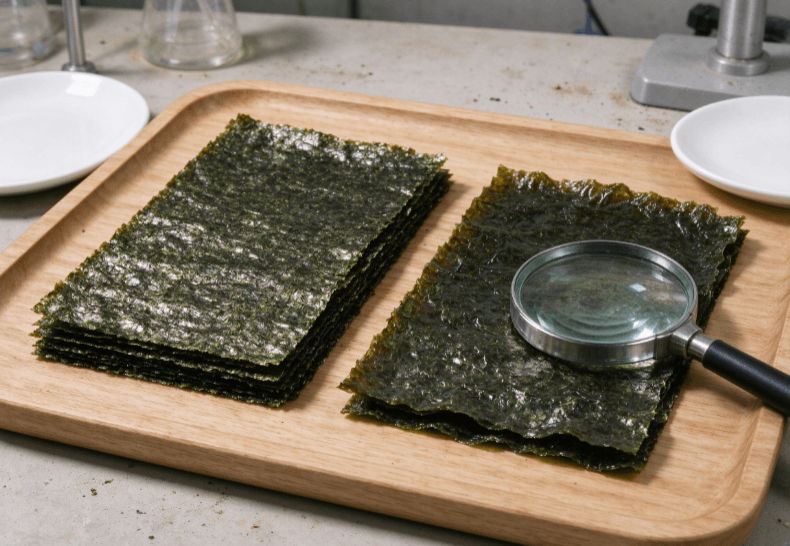
Texture changes are usually among the first noticeable signs that sushi nori has lost quality.
Fresh roasted nori is typically dry, relatively crisp, and characterized by a mild roasted seaweed aroma.
After prolonged exposure to moisture or unfavorable storage conditions, its properties may change.
| Quality Indicator | Good Condition | Possible Deterioration |
|---|---|---|
| Texture | Dry and crisp | Soft, sticky, or chewy |
| Color | Characteristic dark green | Unusual fading or discoloration |
| Aroma | Mild roasted seaweed smell | Musty, rancid, or stale odor |
| Surface | Clean and dry | Visible mold or unusual deposits |
| Packaging | Intact seal | Punctures, tears, or moisture entry |
Softness alone does not prove that nori is unsafe, but it indicates that the product has absorbed moisture.
If nori has visible mold, an unusual odor, or evidence of contamination, it should be discarded.
Can Soft Nori Become Crispy Again?
Slightly softened nori may regain some crispness through brief, gentle heating in a dry pan or low-temperature oven.
However, heating cannot reverse oxidation, restore degraded flavors, or make contaminated food safe.
If the product has developed an abnormal smell or visible mold, reheating is not an appropriate solution.
Does Nori Expire After Its Best-Before Date?
A best-before date generally indicates the period during which a product is expected to maintain its intended quality.
The USDA explains that quality-based date labels are not necessarily safety deadlines. However, improper storage or damaged packaging can make a product unsuitable before its printed date.
Food Safety and Inspection Service
For sushi nori, inspect the packaging condition and follow the manufacturer’s storage instructions.
Conclusion
Sushi nori shelf life depends on how effectively the product is protected from moisture, oxygen, heat, and physical damage.
For unopened products, follow the manufacturer’s labeled shelf life. After opening, airtight storage and limited exposure to humid air are the most effective ways to maintain crispness.
Whether nori is used in a home kitchen or professional sushi preparation, careful storage helps preserve the texture, aroma, and appearance that make roasted seaweed suitable for sushi.
FAQ
How long does sushi nori last once opened?
Opened nori is best used promptly. Its quality depends on humidity, temperature, and how effectively the remaining sheets are sealed.
Why does sushi nori become chewy?
Nori absorbs moisture from surrounding air or moist ingredients. This changes its physical structure and reduces its crispness.
Can sushi nori be stored in the freezer?
Freezing is possible with suitable airtight packaging, but it is generally unnecessary for properly dried nori. Condensation during thawing can damage texture.
Can you eat sushi nori after the expiration date?
A quality-based best-before date does not automatically indicate spoilage. However, products showing mold, abnormal odors, or contamination should not be consumed.
Does a desiccant help keep nori fresh?
A suitable food-packaging desiccant can help control moisture inside a sealed package. It does not replace moisture-barrier packaging or proper storage.
Reference Sources
1. U.S. Food and Drug Administration (FDA) — Water Activity (aw) in Foods. Explains water activity and its relationship to food stability.
2. Journal of Food Science (2013) — Effects of Water Activity on the Lipid Oxidation and Antioxidants of Dried Laver During Storage. Provides experimental evidence concerning moisture-related deterioration in dried laver.
3. USDA Food Safety and Inspection Service — Food Product Dating. Explains the meaning of food quality date labels.